
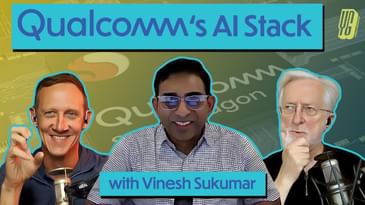


Join Jason Howell and Jeff Jarvis as they explore recent developments in AI, from Apple's upcoming Apple Intelligence beta to OpenAI's SearchGPT product, before sitting down with Qualcomm's Vinesh Sukumar to discuss the cutting-edge of on-device AI.
🔔 Are you a fan of AI Inside? PLEASE fill out the customer survey: http://aiinside.show/survey
🔔 Please support our work on Patreon: http://www.patreon.com/aiinsideshow
NEWS:
Apple's AI Features Rollout Will Miss Upcoming iPhone Software Overhaul
OpenAI starts rolling out its Her-like voice mode for ChatGPT
AI ‘Friend’ Company Spent $1.8 Million and Most of Its Funds on Domain Name
Investors Are Suddenly Getting Very Concerned That AI Isn't Making Any Serious Money
INTERVIEW:
Introduction of guest Vinesh Sukumar, head of Generative AI Product, from Qualcomm
Vinesh's background and experience, including competing in the 1992 Olympics
Discussion of AI's impact on the Olympics and sports
Qualcomm's approach to on-device AI and edge computing
The importance of personalized AI experiences
Examples of AI applications in everyday life, including photo editing and creative tools
Qualcomm's focus on multimodality in AI development
Future directions for AI at Qualcomm, including orchestration and edge-cloud collaboration
[00:00:01] [SPEAKER_04]: This is AI Inside episode 28, recorded Wednesday, July 31st, 2024. Ratted Out By Your AI Friend.
[00:00:11] [SPEAKER_04]: This episode of AI Inside is made possible by our wonderful patrons at patreon.com slash AI Inside Show.
[00:00:17] [SPEAKER_04]: If you like what you hear, head on over and support us directly. And thank you for making independent podcasting possible.
[00:00:29] [SPEAKER_04]: What's going on, everybody? Welcome to yet another episode of AI Inside, the show where we take a look at the AI that is sprinkled throughout so many things, especially in the world of technology and even the Olympics, which we'll talk about a little bit later.
[00:00:44] [SPEAKER_04]: I'm one of your hosts, Jason Howell, joined as always by my co-host, the awesome, the original, the amazing Jeff Jarvis.
[00:00:52] [SPEAKER_04]: Hello, boss. How are you?
[00:00:55] [SPEAKER_04]: Like, I don't know about that introduction, but okay then.
[00:01:00] [SPEAKER_01]: Good to see you.
[00:01:01] [SPEAKER_01]: Imposter syndrome.
[00:01:04] [SPEAKER_04]: Hey, look, you deserve some pomp and circumstance. You are an amazing individual, and I'm so delighted to be able to do this show with you each and every week.
[00:01:12] [SPEAKER_01]: Same back.
[00:01:13] [SPEAKER_04]: Good to have you here. Good to have those of you watching live. We're doing this show live on a Wednesday, as we do each and every Wednesday.
[00:01:20] [SPEAKER_04]: We do have some information there that I'll share at the end of the episode, basically just a little bit of a time change.
[00:01:26] [SPEAKER_04]: So that's coming up a little bit later.
[00:01:29] [SPEAKER_04]: But we do do this show each and every week.
[00:01:31] [SPEAKER_04]: We are empowered to do this show and enabled to do this show largely because we have a wonderful patron community on patreon.com slash AI Inside Show helping us do this show on a weekly basis.
[00:01:45] [SPEAKER_04]: We can't thank you enough.
[00:02:15] [SPEAKER_04]: Just call out real quick.
[00:02:16] [SPEAKER_04]: Y'all have been super, super helpful sending us whatever information you want to share with us at AI Inside.show slash survey.
[00:02:27] [SPEAKER_04]: This is just a listener kind of survey that allows us to get a better understanding of who you are, what you like about the show, what you think could be better.
[00:02:37] [SPEAKER_04]: And beyond that, it enables us to really kind of build up the health of the show by, you know, seeking out some sponsor interest and stuff.
[00:02:47] [SPEAKER_04]: So it's really coming in handy.
[00:02:48] [SPEAKER_04]: I'm amazed at the response.
[00:02:50] [SPEAKER_04]: Could use a little bit more.
[00:02:51] [SPEAKER_04]: And then I think this is probably the last week that I'm going to pester y'all to do that.
[00:02:56] [SPEAKER_04]: But yeah, get in there.
[00:02:57] [SPEAKER_04]: AI Inside.show slash survey.
[00:02:59] [SPEAKER_04]: It takes like five minutes.
[00:03:00] [SPEAKER_04]: It's anonymous.
[00:03:01] [SPEAKER_04]: And it just really helps us out with the show.
[00:03:04] [SPEAKER_04]: With that said, we do have a very – a longer show than normal.
[00:03:10] [SPEAKER_04]: So if you saw your total runtime in your podcast feed, there is reason for that.
[00:03:14] [SPEAKER_04]: We're going to start off with the news as we've been doing, as we really enjoy.
[00:03:17] [SPEAKER_04]: And then a little bit later on in the episode, we're going to have an amazing guest from Qualcomm, Vinesh Sukumar, who is the product development lead for AI and machine learning at Qualcomm.
[00:03:30] [SPEAKER_04]: And as we know, Qualcomm is doing amazing things in the world of AI and especially on-device AI for mobility and that sort of stuff.
[00:03:37] [SPEAKER_04]: That's all coming up a little bit later.
[00:03:39] [SPEAKER_04]: But before we get there, we got a lot of news to talk about.
[00:03:42] [SPEAKER_04]: So let's dive into that, starting, I suppose, with Apple because this has kind of been a big week for Apple, which we'll talk about.
[00:03:53] [SPEAKER_04]: But you may remember not too long ago, Apple kind of unveiled finally its approach for artificial intelligence on the iPhone,
[00:04:05] [SPEAKER_04]: basically saying that iOS 18, iPadOS 18, we're going to release with what they call Apple Intelligence, which is a smart, I think, play on AI.
[00:04:17] [SPEAKER_04]: It kind of reshapes what AI actually stands for and bringing some of these features to iOS.
[00:04:23] [SPEAKER_04]: But Mark Gurman at Bloomberg – I almost called him Mark Bloomberg, which wouldn't be that far off.
[00:04:30] [SPEAKER_04]: You should be so lucky, yeah.
[00:04:31] [SPEAKER_04]: I know, right?
[00:04:33] [SPEAKER_04]: Mark Gurman, who has all the details and all the inside scoops, it seems, on Apple, says that this is going to come later in the form of an update.
[00:04:41] [SPEAKER_04]: So you're not going to see Apple Intelligence right out of the gate when iOS 18 launches, I think, next month.
[00:04:51] [SPEAKER_04]: Well, if we were August – I think it's in September.
[00:04:54] [SPEAKER_04]: And then the Apple Intelligence stuff coming a little bit later than that.
[00:05:01] [SPEAKER_04]: It might only be like a couple of weeks later.
[00:05:03] [SPEAKER_04]: But nonetheless, I'm sure Apple wanted to launch out of the gate with this on the device.
[00:05:09] [SPEAKER_04]: And I don't know how much this really hurts things.
[00:05:12] [SPEAKER_04]: But if you're looking forward to this, you're going to have to wait a little bit, probably for a good measure.
[00:05:18] [SPEAKER_01]: So refresh my memory, Jason.
[00:05:19] [SPEAKER_01]: Listen, Apple Intelligence is otherwise known as ChatGPT, yes?
[00:05:24] [SPEAKER_04]: Well, they certainly have a deal with ChatGPT, yes.
[00:05:28] [SPEAKER_01]: And they might have one with Google that was put off to later.
[00:05:31] [SPEAKER_01]: Right.
[00:05:32] [SPEAKER_01]: What's the deal from Apple?
[00:05:33] [SPEAKER_01]: Do we have any idea what they're going to be actually creating here?
[00:05:36] [SPEAKER_04]: Well, we do, in fact.
[00:05:39] [SPEAKER_04]: And that kind of ties in with another piece of this story, which is essentially that if you're a developer, you can get access to iOS 18.1 beta.
[00:05:51] [SPEAKER_04]: So assume that when the new iPhone launches, it's going to have iOS 18, which will not have Apple Intelligence on it.
[00:05:59] [SPEAKER_04]: 18.1 will eventually be the update that brings Apple Intelligence.
[00:06:05] [SPEAKER_04]: Developers now have access to 18.1 so they can start playing with these.
[00:06:09] [SPEAKER_04]: And so what you can expect with this version are things like a new design for Siri, kind of a new kind of presentation of Siri to show that it's been updated and it has new abilities.
[00:06:22] [SPEAKER_04]: The ability to understand commands when a speaker stumbles.
[00:06:27] [SPEAKER_04]: So essentially, Siri has long been this kind of punching bag in the realm of on-device voice AI and voice assistants and stuff.
[00:06:37] [SPEAKER_04]: It's always been kind of near the end of the pack.
[00:06:39] [SPEAKER_04]: Definitely not in the lead, according to most people who have used it.
[00:06:43] [SPEAKER_04]: Sounds like Apple is getting more serious with Apple Intelligence to kind of supercharge it.
[00:06:48] [SPEAKER_04]: But improved photo search and movie creation, AI summaries, of course.
[00:06:53] [SPEAKER_04]: So for things like mail messages, voicemail transcriptions, writing tools.
[00:06:59] [SPEAKER_04]: I think that's where some of at least part of – well, maybe not actually.
[00:07:04] [SPEAKER_04]: I was going to say that some of the chat GPT integrations come, but what I'm realizing is that not included in this beta is that chat GPT integration.
[00:07:15] [SPEAKER_04]: So maybe some of this summarization on device and the transcriptions and text generations, maybe that's not chat GPT after all.
[00:07:25] [SPEAKER_04]: That's what that leads me to believe anyways.
[00:07:28] [SPEAKER_01]: It's a question that, as you're talking, occurs to me.
[00:07:33] [SPEAKER_01]: Siri has been a laughingstock.
[00:07:34] [SPEAKER_01]: I think you're right.
[00:07:35] [SPEAKER_01]: Punching bag, however you refer to it, right?
[00:07:39] [SPEAKER_01]: Yeah.
[00:07:39] [SPEAKER_01]: We know that Amazon is supposedly losing a fortune on Madame A.
[00:07:48] [SPEAKER_01]: Google's voice interface has not stormed the world.
[00:07:54] [SPEAKER_01]: Why does anybody then think that chat interfaces from AI is going to take over the world?
[00:08:01] [SPEAKER_01]: Right?
[00:08:02] [SPEAKER_01]: Yes, it's different.
[00:08:02] [SPEAKER_04]: When you say AI – now I feel like I have to clarify.
[00:08:05] [SPEAKER_04]: When you say AI, do you mean chat interfaces using artificial intelligence?
[00:08:08] [SPEAKER_04]: Yes, yes.
[00:08:09] [SPEAKER_04]: Or chat interfaces using Apple intelligence?
[00:08:12] [SPEAKER_04]: No, no, no.
[00:08:13] [SPEAKER_01]: I mean – sorry.
[00:08:13] [SPEAKER_01]: Good point.
[00:08:14] [SPEAKER_01]: Our AI being the AI insertion.
[00:08:17] [SPEAKER_01]: Right?
[00:08:17] [SPEAKER_01]: Yeah.
[00:08:18] [SPEAKER_01]: I mean, granted, it's different.
[00:08:21] [SPEAKER_01]: Granted, there's more horsepower behind it and more functionality.
[00:08:25] [SPEAKER_01]: But nonetheless, just at the level of interface, people didn't grab on to the voice interfaces as much as all those companies would have wished.
[00:08:35] [SPEAKER_01]: How do we forget Microsoft, by the way?
[00:08:38] [SPEAKER_01]: What's – what do you call it?
[00:08:39] [SPEAKER_01]: What's theirs?
[00:08:41] [SPEAKER_04]: Why am I?
[00:08:42] [SPEAKER_04]: It's not Bing Chat.
[00:08:43] [SPEAKER_04]: Morbird or something, right?
[00:08:44] [SPEAKER_01]: Well, no, Bing Chat is the AI, but they had a voice one too.
[00:08:48] [SPEAKER_04]: Yes, they did, and I'm super blanking on that.
[00:08:51] [SPEAKER_04]: I'm suddenly blanking on that.
[00:08:52] [SPEAKER_04]: I can't remember the name.
[00:08:53] [SPEAKER_01]: Anyway, so those things didn't take over the world.
[00:08:57] [SPEAKER_01]: Yeah.
[00:08:57] [SPEAKER_01]: And so it just seems like there was very little extrapolation from that experience to the AI chat potentiality where people might have said, well, maybe this isn't going to work.
[00:09:08] [SPEAKER_01]: Maybe people don't really want to do this.
[00:09:09] [SPEAKER_01]: They don't want to chat.
[00:09:11] [SPEAKER_01]: It is.
[00:09:11] [SPEAKER_01]: Yeah.
[00:09:12] [SPEAKER_01]: Granted, it's voice and chat is also typing and there's lots of other functionality.
[00:09:16] [SPEAKER_01]: I get all that.
[00:09:17] [SPEAKER_01]: But it just strikes me that there would have been a little more skepticism going in about the market potential here.
[00:09:21] [SPEAKER_01]: Just a thought.
[00:09:22] [SPEAKER_04]: Yeah.
[00:09:23] [SPEAKER_04]: Well, and I think we're going to talk about this.
[00:09:25] [SPEAKER_04]: I think this is going to come up a lot throughout kind of the news stories that we have today is this idea that for the companies in big tech, they can't afford not to be there because everybody else is.
[00:09:40] [SPEAKER_04]: And also, you know, something that keeps coming up for me in AI right now is, you know, when you are a hammer, everything seems like a nail.
[00:09:49] [SPEAKER_04]: Amen.
[00:09:50] [SPEAKER_04]: And it seems like we're early enough into the development of all of this for companies to recognize that it has some sort of potential.
[00:10:02] [SPEAKER_04]: And instead of taking a measure like, well, let's step back and see what are the really good, you know, kind of couple of powerful use cases of this.
[00:10:12] [SPEAKER_04]: They're just diving, you know, face first in and saying, well, let's just throw it.
[00:10:17] [SPEAKER_04]: Everything's a nail.
[00:10:18] [SPEAKER_04]: Let's hit it all with the AI hammer and see, you know, what works.
[00:10:24] [SPEAKER_04]: And so to a certain degree, that's kind of what it feels like right now.
[00:10:27] [SPEAKER_04]: I don't know that it's the perfect integration, what Apple is doing here, that Apple feels like it needs to be there.
[00:10:32] [SPEAKER_04]: But I'm sure that there is from a business perspective, there is that pressure of being where everyone else is.
[00:10:40] [SPEAKER_04]: You kind of have to, because if you make the wrong decision there and you don't go there because you are hedging your bet that it's not going to be what everyone else thinks it might be, then you're really screwing yourself.
[00:10:53] [SPEAKER_04]: I mean, Google kind of found itself in that position, right?
[00:10:56] [SPEAKER_04]: It was such a strong, dominant early player in voice assistants and, you know, the AI of that time.
[00:11:05] [SPEAKER_04]: And then it really kind of suddenly lost ground when ChatGPT came onto the scene.
[00:11:10] [SPEAKER_04]: It was like, Google, where were you?
[00:11:12] [SPEAKER_04]: Yeah.
[00:11:13] [SPEAKER_04]: Did you lose your steam?
[00:11:14] [SPEAKER_04]: Why suddenly did that happen or how did that happen?
[00:11:18] [SPEAKER_01]: Right.
[00:11:18] [SPEAKER_01]: So.
[00:11:19] [SPEAKER_01]: So we're both Android guys, so I don't think we'll have great experience with Apple.
[00:11:24] [SPEAKER_01]: We'll have to ask our friends how they do when they finally get it.
[00:11:27] [SPEAKER_04]: But somewhere in my stacks of random things that I still need to get to, I do have an iPhone that, I don't know if I mentioned this on any of the shows.
[00:11:37] [SPEAKER_04]: My family, we moved over from Mint Mobile to T-Mobile.
[00:11:41] [SPEAKER_04]: And when we did, you know, my daughters, they wanted iPhones.
[00:11:45] [SPEAKER_04]: And so.
[00:11:46] [SPEAKER_04]: Traitors.
[00:11:47] [SPEAKER_04]: You know, whatever.
[00:11:50] [SPEAKER_04]: Kids.
[00:11:50] [SPEAKER_04]: They can make their own choices.
[00:11:52] [SPEAKER_04]: You know, they have the influence of their peers at school and everything.
[00:11:55] [SPEAKER_04]: Right.
[00:11:56] [SPEAKER_04]: But when we did, T-Mobile has all those deals where they're like, okay, well, you can get a free iPhone, blah, blah, blah.
[00:12:02] [SPEAKER_04]: So I ended up actually getting an iPhone 14, I think.
[00:12:06] [SPEAKER_04]: It might even be a 13.
[00:12:07] [SPEAKER_04]: But I figured an iPhone is better than no iPhone for what I'm doing right now.
[00:12:11] [SPEAKER_04]: So I hope, although I'm kind of skeptical that it will happen, I hope that some of these features eventually make it to the iPhone that I have.
[00:12:18] [SPEAKER_04]: Yeah.
[00:12:18] [SPEAKER_04]: So I can play around with it.
[00:12:19] [SPEAKER_04]: Good.
[00:12:20] [SPEAKER_04]: But we'll see.
[00:12:22] [SPEAKER_04]: And I'm super curious to see, like, Apple, you know, has often, you know, the story about Apple is that it waits.
[00:12:30] [SPEAKER_04]: Even when things are hot, it waits on it until the right time.
[00:12:35] [SPEAKER_04]: And then it launches it as if it's the first to do it.
[00:12:38] [SPEAKER_04]: And largely, a lot of the people that are in the Apple camp believe in that kind of approach.
[00:12:45] [SPEAKER_04]: And they say, oh, well, none of that other stuff matters.
[00:12:47] [SPEAKER_04]: Apple did it the right way.
[00:12:49] [SPEAKER_04]: And I'm curious to see if that's what happens with AI when Apple brings Apple intelligence to these devices.
[00:12:56] [SPEAKER_04]: Will people see it through the same lens?
[00:12:58] [SPEAKER_04]: That same, like, Apple sprinkles its magic on something and now suddenly it works.
[00:13:04] [SPEAKER_01]: Yeah, we'll see.
[00:13:05] [SPEAKER_01]: We'll see.
[00:13:06] [SPEAKER_01]: We'll see.
[00:13:06] [SPEAKER_01]: It is a game of, it's all in all a game of technological chicken.
[00:13:09] [SPEAKER_01]: I think you're right.
[00:13:10] [SPEAKER_01]: Everybody, but what it means is nobody's really separate from the pack.
[00:13:14] [SPEAKER_04]: That's true.
[00:13:15] [SPEAKER_04]: Especially if they're all leaning in on the same, you know, technologies.
[00:13:18] [SPEAKER_04]: Like, Apple has a deal with ChatGPT, just like everyone else has a deal with ChatGPT.
[00:13:23] [SPEAKER_04]: So how do you differentiate if that's at the core of what you're offering?
[00:13:27] [SPEAKER_01]: It's all built on Transformer in the beginning.
[00:13:30] [SPEAKER_01]: So Google started it all.
[00:13:31] [SPEAKER_01]: That's where they all are.
[00:13:32] [SPEAKER_01]: So I think we're awaiting the next leap here, but it ain't happening yet.
[00:13:37] [SPEAKER_01]: Instead, now it's trying to implement what exists.
[00:13:40] [SPEAKER_01]: And it's a bunch of solutions looking for problems.
[00:13:43] [SPEAKER_04]: Yeah, totally.
[00:13:43] [SPEAKER_04]: Like what's not included that will come, you know, image generation.
[00:13:47] [SPEAKER_04]: Okay.
[00:13:49] [SPEAKER_04]: Emoji generation, which had a little bit of kind of like buzz around it, but I wouldn't
[00:13:54] [SPEAKER_04]: say that's an earth shattering feature.
[00:13:56] [SPEAKER_04]: Maybe it'll be fun, but I don't think it's groundbreaking, you know, absolute reason you
[00:14:02] [SPEAKER_04]: got to get this phone is because of the emoji generation, man.
[00:14:04] [SPEAKER_04]: It's amazing.
[00:14:07] [SPEAKER_04]: Automated photos, cleanup, you know, random Siri improvements, you know, other things like
[00:14:12] [SPEAKER_04]: that.
[00:14:12] [SPEAKER_04]: So none of these things are blow me away.
[00:14:15] [SPEAKER_04]: I've never had this on a mobile phone before.
[00:14:18] [SPEAKER_04]: I've never experienced it, you know, with other AI systems.
[00:14:21] [SPEAKER_04]: They're all keep playing catch up right now.
[00:14:23] [SPEAKER_04]: Yeah.
[00:14:23] [SPEAKER_04]: A little shruggy.
[00:14:24] [SPEAKER_04]: I think you're absolutely right.
[00:14:26] [SPEAKER_04]: Yeah.
[00:14:27] [SPEAKER_04]: Well, speaking of Apple, the company has agreed to abide by the Biden Harris administration's
[00:14:36] [SPEAKER_04]: AI Safety Institute Consortium Safeguards.
[00:14:40] [SPEAKER_04]: This was originally created back in February.
[00:14:43] [SPEAKER_04]: And my understanding is Apple was on board, but hadn't signed on to kind of adhere to the safeguards
[00:14:52] [SPEAKER_04]: and the practices that are proposed through this consortium.
[00:14:59] [SPEAKER_04]: So this would include testing its AI systems for things like security flaws.
[00:15:04] [SPEAKER_04]: Also sharing those details with the US government.
[00:15:08] [SPEAKER_04]: Detection of AI generated content, standards and tools for keeping AI safe.
[00:15:17] [SPEAKER_04]: I think one thing that's important here is that this is not an enforceable thing, right?
[00:15:21] [SPEAKER_04]: This is totally voluntary.
[00:15:23] [SPEAKER_04]: But Apple's basically saying like, okay, yeah, we can get it behind that.
[00:15:28] [SPEAKER_01]: And again, everybody else is saying, okay, which I think is not a bad way to start.
[00:15:32] [SPEAKER_01]: It's not a, you must do this.
[00:15:36] [SPEAKER_01]: And it's not draconian.
[00:15:37] [SPEAKER_01]: That's what I'm trying to say.
[00:15:38] [SPEAKER_01]: I guess the guidelines don't say we know all the future of AI and everything that should be done.
[00:15:45] [SPEAKER_01]: Right.
[00:15:45] [SPEAKER_01]: It says, what it says is let's keep some stuff in mind.
[00:15:48] [SPEAKER_01]: Let's try to keep an eye on this.
[00:15:49] [SPEAKER_01]: Let's make that, I hope, a living document that will change depending upon the next administration.
[00:15:56] [SPEAKER_01]: And I think it's a fine beginning to regulation.
[00:16:01] [SPEAKER_01]: To my mind, people generally like the European AI law.
[00:16:06] [SPEAKER_01]: But I think this makes more sense at the very beginning when we don't know enough.
[00:16:10] [SPEAKER_01]: So Apple should sign on, yes.
[00:16:13] [SPEAKER_01]: And then we'll see where that goes.
[00:16:15] [SPEAKER_04]: Yep.
[00:16:17] [SPEAKER_04]: Apple taking itself more seriously with AI by saying, all right.
[00:16:21] [SPEAKER_04]: And we'll see where that heads.
[00:16:23] [SPEAKER_04]: Yeah, because I think you're absolutely right.
[00:16:24] [SPEAKER_04]: Making too many declarative kind of forced judgments around this at a time where we really don't know what it's developing into can have a serious impact on the development of the technology.
[00:16:41] [SPEAKER_04]: And maybe unnecessarily so.
[00:16:44] [SPEAKER_04]: Although the AI doomers would probably disagree.
[00:16:46] [SPEAKER_04]: But there you go.
[00:16:48] [SPEAKER_04]: Yep.
[00:16:49] [SPEAKER_04]: That's okay.
[00:16:50] [SPEAKER_04]: They could disagree.
[00:16:52] [SPEAKER_04]: Let's see here.
[00:16:54] [SPEAKER_04]: Super.
[00:16:55] [SPEAKER_04]: All right.
[00:16:55] [SPEAKER_04]: This is a biggie.
[00:16:56] [SPEAKER_04]: I'm very curious to hear your take on this, Jeff.
[00:17:01] [SPEAKER_04]: OpenAI finally unveiled what we knew was coming for some time.
[00:17:06] [SPEAKER_04]: And in fact, a couple of months ago when they had their GPT-4.0 announcement, there was some questions the weekend leading up to that event.
[00:17:17] [SPEAKER_04]: Because it was like very last minute.
[00:17:19] [SPEAKER_04]: Like, oh, by the way, we're having an event on Monday.
[00:17:21] [SPEAKER_04]: And there was a lot of news that was leaking out that was like, oh, well, here it comes.
[00:17:25] [SPEAKER_04]: Expect to see search, you know, a search product coming from OpenAI.
[00:17:29] [SPEAKER_04]: That didn't happen.
[00:17:30] [SPEAKER_04]: We saw GPT-4.0, which we'll talk about in a few minutes here.
[00:17:35] [SPEAKER_04]: But we didn't see the search product.
[00:17:38] [SPEAKER_04]: Now we are.
[00:17:39] [SPEAKER_04]: ChatGPT is taking on search with SearchGPT is what they're calling it, which makes sense, I suppose.
[00:17:49] [SPEAKER_04]: Users will be presented with a large text box that says, what are you looking for?
[00:17:54] [SPEAKER_04]: And then, you know, you type in what you're looking for.
[00:17:56] [SPEAKER_04]: The results are organized.
[00:17:58] [SPEAKER_04]: They're contextualized as AI LLMs are want to do, I suppose.
[00:18:05] [SPEAKER_04]: And, yeah, we can start from there.
[00:18:08] [SPEAKER_04]: Have you kind of read through some of what this is?
[00:18:11] [SPEAKER_04]: Because, I mean, not everybody has access to it.
[00:18:13] [SPEAKER_04]: We don't have access to it yet.
[00:18:14] [SPEAKER_04]: So we don't know yet what it is.
[00:18:15] [SPEAKER_04]: Yeah.
[00:18:15] [SPEAKER_04]: Yeah, specifically.
[00:18:16] [SPEAKER_04]: It's a very small, controlled group that does.
[00:18:19] [SPEAKER_04]: But what are you thinking?
[00:18:21] [SPEAKER_04]: Color me skeptical.
[00:18:24] [SPEAKER_01]: I figured.
[00:18:25] [SPEAKER_01]: Yeah.
[00:18:25] [SPEAKER_01]: And I've been skeptical about this for a few reasons.
[00:18:27] [SPEAKER_01]: One, for the hundredth time, generative AI can't do facts.
[00:18:32] [SPEAKER_01]: It doesn't lie.
[00:18:33] [SPEAKER_01]: It doesn't know what the truth is.
[00:18:34] [SPEAKER_01]: So the ability for it to give me an answer is going to be dubious.
[00:18:41] [SPEAKER_01]: And I think that's a huge credibility issue.
[00:18:44] [SPEAKER_01]: Now, if all it's going to do is give me lists of things, well, then Google does that.
[00:18:50] [SPEAKER_01]: And I don't know that we need generative AI to do that because Google already does a good job of that.
[00:18:54] [SPEAKER_01]: What's the value add here in terms of what an LLM could do?
[00:18:58] [SPEAKER_01]: Well, again, it could summarize things.
[00:19:00] [SPEAKER_01]: And it does that now.
[00:19:01] [SPEAKER_01]: And Google does that now.
[00:19:03] [SPEAKER_01]: But the credibility is low.
[00:19:09] [SPEAKER_01]: And if it's a chat interface, then I suspect it's going to do more summarization than linking.
[00:19:16] [SPEAKER_01]: But we'll see.
[00:19:17] [SPEAKER_01]: And I hope if it does link to things, that's good.
[00:19:20] [SPEAKER_01]: Then that will probably bring up copyright fights again because it'll probably be summarizing things that it hasn't paid Bakshish money for.
[00:19:29] [SPEAKER_01]: So I think it's open AI trying to keep up with the Joneses.
[00:19:33] [SPEAKER_01]: The Joneses are trying to keep up with the Smiths here.
[00:19:37] [SPEAKER_01]: And I could be surprised, but I'm not holding a bated breath here.
[00:19:43] [SPEAKER_01]: I think it's a way just to poke Google in the eyes.
[00:19:45] [SPEAKER_01]: What do you think?
[00:19:47] [SPEAKER_04]: Yeah.
[00:19:48] [SPEAKER_04]: Well, I mean, as you know, I've been a pretty happy perplexity user for the last handful of months since, God, do I even have the device anymore that the Rabbit R1?
[00:19:59] [SPEAKER_04]: Like, I know I have it.
[00:20:00] [SPEAKER_04]: It's in a backpack over there.
[00:20:01] [SPEAKER_04]: It's too far away.
[00:20:02] [SPEAKER_01]: It's already reached that back-of-the-shelf status.
[00:20:04] [SPEAKER_01]: But go ahead.
[00:20:05] [SPEAKER_04]: Oh, I mean, it was almost immediately there.
[00:20:08] [SPEAKER_04]: It was really hard for me to justify why I use that device over anything else.
[00:20:14] [SPEAKER_01]: Did your family look at you and say, come on, Dad, why did you get this?
[00:20:18] [SPEAKER_04]: I mean, they thought the device was neat-looking.
[00:20:21] [SPEAKER_04]: But yeah, no, it does not make sense.
[00:20:25] [SPEAKER_04]: It is just a perplexing – speaking of perplexity, it's a perplexing device.
[00:20:29] [SPEAKER_04]: Anyways, my point being that, like, I wouldn't even have perplexity if I hadn't bought that device to begin with.
[00:20:35] [SPEAKER_04]: And, you know, the device, the Rabbit R1 came with a perplexity year-long subscription.
[00:20:40] [SPEAKER_04]: So I'm very happy because it's gotten me very used to using perplexity, using these LLMs to figure out, like, how can I integrate it?
[00:20:50] [SPEAKER_04]: And I will say, you know, from that standpoint, I use perplexity a lot in the examples, you know, that we see attached to this announcement.
[00:20:58] [SPEAKER_04]: Now, for example, they included one query in the what-are-you-looking-for text box to say music festivals in Boone, North Carolina in August.
[00:21:12] [SPEAKER_04]: So if you were to go to Google and say music festivals in Boone, North Carolina in August, you're either hoping to find someone who's written that article as a result,
[00:21:23] [SPEAKER_04]: or you're hoping Google has enough information, context, knowledge, whatever you want to call it,
[00:21:29] [SPEAKER_04]: to pull back a number of different articles or websites that collects all that information into a list so that you can pull from that.
[00:21:39] [SPEAKER_04]: And by list, I mean, you know, your stack of blue links, essentially.
[00:21:42] [SPEAKER_04]: And then you have to go in and you have to catalog those things.
[00:21:45] [SPEAKER_04]: With this product, essentially, what I'm showing on the screen, if you're looking at the video product, is you'd put in that query.
[00:21:52] [SPEAKER_04]: And essentially, let's just pretend that Search GPT is doing that search for you, pulling the information of each of the things that it finds.
[00:22:01] [SPEAKER_04]: So an Appalachian Summer Festival, giving you a short description as far as when it is, what exactly it entails.
[00:22:09] [SPEAKER_04]: And then also a link so that you can click through to the source to, in this case, App Summer, which I think is probably, I'm guessing, the legitimate site for that particular event.
[00:22:22] [SPEAKER_04]: You know, Mountain Dance and Folk Festival, that points to a Wikipedia page.
[00:22:27] [SPEAKER_04]: So you might have to do some more digging there.
[00:22:30] [SPEAKER_04]: So I guess, in essence, and this is largely kind of what I've gotten used to with perplexity, is yes, you can do this in Google.
[00:22:38] [SPEAKER_04]: But there is something to this, like, organizational ability of something like this.
[00:22:45] [SPEAKER_04]: And, you know, anytime I get this information back, like if I was to get these results, again, I've been doing this at least long enough to scrutinize and to understand that some of this information might not be 100% accurate.
[00:22:59] [SPEAKER_04]: But having it presented in a way like this versus a stack of blue links that I'm taking my chances when I'm clicking in and stuff, I don't know.
[00:23:07] [SPEAKER_04]: For my brain, maybe I'm just more open to it because I've been using perplexity for a while now.
[00:23:12] [SPEAKER_04]: But it just seems like a better, like, it's just more organized for my brain.
[00:23:17] [SPEAKER_04]: And I like that about it.
[00:23:18] [SPEAKER_04]: So I don't know.
[00:23:19] [SPEAKER_04]: I'm curious to play around with it.
[00:23:22] [SPEAKER_01]: Yeah.
[00:23:22] [SPEAKER_01]: Yeah.
[00:23:23] [SPEAKER_01]: We'll see where it goes.
[00:23:24] [SPEAKER_01]: It also fits – the question for me, too, is the interesting issues with all the copyright fights going on.
[00:23:31] [SPEAKER_01]: Perplexity has now agreed – since you're on perplexity, I just mentioned this – is now starting to do what OpenAI is doing and starting to pay publishers.
[00:23:39] [SPEAKER_01]: They got in bucket loads of trouble because they were ignoring robots.txt, allegedly.
[00:23:46] [SPEAKER_01]: We're making up different crawlers with different names to still crawl, even though they were told not to.
[00:23:54] [SPEAKER_01]: And by the way, robots.txt is just a norm.
[00:23:57] [SPEAKER_01]: It's not a law.
[00:23:58] [SPEAKER_01]: So if somebody wants to say, I choose to ignore your robot, I'm going to scan anyway, sue me because there's nothing that I don't think will stop you except for your reputation.
[00:24:09] [SPEAKER_01]: But now perplexity is doing the same PR game where they're going to pay a few publishers to do this.
[00:24:15] [SPEAKER_01]: And so it'll be interesting to see who is paid to be quiet versus who will protest if their content comes up in a way that they don't like.
[00:24:28] [SPEAKER_01]: And so proof and putting, I think what we'll see, maybe this is all to the good.
[00:24:32] [SPEAKER_01]: Maybe they will have a discipline, they being both OpenAI, search, and perplexity, will have a discipline of linking and a discipline of crediting.
[00:24:42] [SPEAKER_01]: And if that's the case, hallelujah, I'd be happy.
[00:24:45] [SPEAKER_01]: Yeah.
[00:24:45] [SPEAKER_01]: But we'll see.
[00:24:47] [SPEAKER_04]: Yeah.
[00:24:47] [SPEAKER_04]: I mean, I'm optimistic that the linkage is going to happen, is going to continue happening.
[00:24:54] [SPEAKER_04]: I think everything that you spelled out is certainly something to be concerned with.
[00:25:00] [SPEAKER_04]: And I wouldn't want to use the product if it wasn't linking, to be honest.
[00:25:04] [SPEAKER_04]: Because then I just don't have enough trust in it to say, oh, well, you've given me everything I need to know.
[00:25:10] [SPEAKER_04]: Cool.
[00:25:10] [SPEAKER_04]: I can move on.
[00:25:11] [SPEAKER_04]: Like, I need that link for reassurance.
[00:25:13] [SPEAKER_04]: And in fact, when I get my results from perplexity, I'm looking for those.
[00:25:18] [SPEAKER_04]: And it gives you a whole link tree down at the bottom.
[00:25:21] [SPEAKER_04]: It puts a little reference number, 1, 2, 3, 4, 5, to reference the link that can be found down below.
[00:25:28] [SPEAKER_04]: And you can dive in.
[00:25:29] [SPEAKER_04]: And you might find differences between what is on the page that they give you and what's in there.
[00:25:35] [SPEAKER_04]: Because none of these systems is 100%.
[00:25:38] [SPEAKER_04]: But at least I feel a little comforted with the fact that, like, if and when I want to go digging, I can find where this was potentially pulled from.
[00:25:47] [SPEAKER_04]: And determine for myself whether that is an authoritative source or whether that's dubious.
[00:25:54] [SPEAKER_04]: And why did you pull that information from there?
[00:25:57] [SPEAKER_04]: That should never have happened to begin with.
[00:25:59] [SPEAKER_01]: One of the interesting things from our story last week about how OpenAI is demanding reporters' files from the New York Times to see whether their reporting is original is perplexity.
[00:26:11] [SPEAKER_01]: When I use Discover, and it links to the things that are the sources, you see how commodified news already is and how they're all writing the same exact story.
[00:26:21] [SPEAKER_01]: So it doesn't speak well to news's argument that, no, we have original reporting and how dare you copy this when it's obvious they're all working on the same sources.
[00:26:30] [SPEAKER_01]: And if not copying each other, then copying the same sources.
[00:26:33] [SPEAKER_01]: Oh, my goodness.
[00:26:34] [SPEAKER_01]: And so perplexity really shows – it's funny.
[00:26:37] [SPEAKER_01]: Be careful what you wish for.
[00:26:38] [SPEAKER_01]: Oh, yeah, it links to everything.
[00:26:40] [SPEAKER_01]: And now you can see how nobody really stands out.
[00:26:43] [SPEAKER_01]: You're all wasting your time doing the same story.
[00:26:46] [SPEAKER_04]: I don't know how many times, just as a podcaster searching for stories for shows and everything, where I pull up a single news story and see basically the same story written by 20 or 30.
[00:26:59] [SPEAKER_04]: They're all on the same train together.
[00:27:02] [SPEAKER_04]: Words are ordered a little differently, this word for that word or whatever, but it's essentially the same exact story.
[00:27:10] [SPEAKER_04]: Yeah, it's kind of numbing.
[00:27:11] [SPEAKER_01]: And it goes back to the beginnings of news there.
[00:27:13] [SPEAKER_01]: Ryan Cordell, who's a professor at University of Illinois, Champaign-Urbana, just put out a paper, which I haven't read yet.
[00:27:19] [SPEAKER_01]: I'll read that and probably talk about it in a future week.
[00:27:21] [SPEAKER_01]: And I've talked about this before where in the early days of newspapers, when they shared newspapers for free through the mails,
[00:27:29] [SPEAKER_01]: and there was a job called the Scissors Editor where you would cut up pieces of paper and put them in, and that was on purpose.
[00:27:35] [SPEAKER_01]: And so he's analyzed how the same story was run in multiple places.
[00:27:40] [SPEAKER_01]: And it becomes interesting that this is the heritage of our newspaper industry.
[00:27:44] [SPEAKER_01]: This is the heritage of our national news networks.
[00:27:46] [SPEAKER_01]: And so all the highfalutin views from the news companies against the AI companies, it's pretty much the same activity.
[00:27:56] [SPEAKER_01]: So I'll be eager to see how this works in search.
[00:27:59] [SPEAKER_01]: But what it says to you is if OpenAI search is great and perplexity takes off, then – and this is something that Axios starts to get to – how does that change us in the news industry?
[00:28:09] [SPEAKER_01]: I think it means even more than in search.
[00:28:12] [SPEAKER_01]: You better stand out and be unique, and you're the only one that can be linked to.
[00:28:16] [SPEAKER_04]: And I think that matters as well.
[00:28:19] [SPEAKER_04]: Absolutely.
[00:28:19] [SPEAKER_04]: What is the impact on that?
[00:28:21] [SPEAKER_04]: Yeah, for sure.
[00:28:22] [SPEAKER_04]: This is the Axios article that you were talking about, AI's search quake shakes media landscape.
[00:28:28] [SPEAKER_04]: It's kind of poetic how they put that.
[00:28:31] [SPEAKER_04]: But yeah, very good article.
[00:28:33] [SPEAKER_04]: Kind of details some of the challenges that you're talking about.
[00:28:36] [SPEAKER_04]: These major AI players all kind of differing on their approach for how they work with the publishers and which publishers are open to this, which ones are incredibly resistant, and how does that impact and shape the news industry going into a new era?
[00:28:57] [SPEAKER_04]: Yep.
[00:28:57] [SPEAKER_04]: Essentially.
[00:28:58] [SPEAKER_04]: Very interesting stuff.
[00:29:00] [SPEAKER_04]: Just for giggles, I, by the way, ran the same query that they did – ChatGPT did with SearchGPT through perplexity and created a page out of it.
[00:29:14] [SPEAKER_04]: And I thought this was pretty funny.
[00:29:16] [SPEAKER_04]: So the query was exactly the same, you know, music festivals in Boone, North Carolina, I think is something along those lines.
[00:29:24] [SPEAKER_04]: And I asked it to do it in August, and then I followed up with, and what about September?
[00:29:30] [SPEAKER_04]: And so it created this, you know, little doc for me that kind of details everything with the little numbers call-outs, you know, so I can link to the sources if need be.
[00:29:39] [SPEAKER_04]: But the photo that it shows for August music festivals in Boone was the SearchGPT interface for the same query that I put in.
[00:29:50] [SPEAKER_04]: So it found it on Twitter.
[00:29:52] [SPEAKER_04]: It's like, oh, it must be this.
[00:29:53] [SPEAKER_04]: Meanwhile, yes.
[00:29:54] [SPEAKER_04]: Well, that's funny.
[00:29:54] [SPEAKER_04]: I can see why you say that, because it's the same damn query.
[00:29:57] [SPEAKER_01]: So everybody copies everybody.
[00:29:59] [SPEAKER_01]: It's just the world we're in.
[00:30:00] [SPEAKER_04]: Yes.
[00:30:01] [SPEAKER_04]: Exactly.
[00:30:02] [SPEAKER_04]: I thought that was pretty funny.
[00:30:04] [SPEAKER_04]: And then finally, before we take a quick break, OpenAI, we were talking just a few minutes ago about the GPT-4.0 launch that happened back in – I think it was May the announcement happened.
[00:30:19] [SPEAKER_04]: And this was the announcement, rather the demonstration slash announcement, where there were two guys on the ChatGPT team having an open conversation with a not Scarlett Johansson AI voice, although it sounded a lot like her.
[00:30:34] [SPEAKER_04]: You know, very kind of – I don't know.
[00:30:37] [SPEAKER_04]: It was a very interesting and sometimes weird-toned demonstration.
[00:30:43] [SPEAKER_04]: Anyways, that product hadn't been officially announced.
[00:30:47] [SPEAKER_04]: We know that Scarlett Johansson had big issues with her voice sound-alike in the product.
[00:30:58] [SPEAKER_04]: And so that voice isn't in there anymore.
[00:31:00] [SPEAKER_04]: It rolled out with the other supporting voices, but that particular voice is not there.
[00:31:05] [SPEAKER_04]: And it is now starting to roll out to people.
[00:31:09] [SPEAKER_04]: Small group of ChatGPT plus subscribers right now.
[00:31:12] [SPEAKER_04]: Now they've been spending time, according to this article on The Verge, tackling some safety issues.
[00:31:18] [SPEAKER_04]: They've tested the product with more than 100 external red teamers, worked in some guardrails to keep it from doing things like generating copyrighted music.
[00:31:28] [SPEAKER_04]: That's one example that was given.
[00:31:30] [SPEAKER_04]: So, you know, if you've been waiting for this feature, waiting to talk to your virtual her or him, it's coming in the fall.
[00:31:39] [SPEAKER_01]: You know, it's interesting.
[00:31:39] [SPEAKER_01]: This is not in the rundown, but this week also, the information headline, Meta Scraps Celebrity AI Chatbots That Fell Flat With Users.
[00:31:48] [SPEAKER_01]: So I don't know whether people want to talk to a fake Scarlett Johansson, right?
[00:31:54] [SPEAKER_01]: And think that they're going to be fooled by the voice.
[00:31:57] [SPEAKER_01]: We'll see whether this is worthwhile or not.
[00:32:00] [SPEAKER_04]: Yeah.
[00:32:01] [SPEAKER_04]: Yeah.
[00:32:01] [SPEAKER_04]: It's interesting.
[00:32:03] [SPEAKER_04]: I mean, you know, maybe with the GPT-40, like the Scarlett Johansson connection obviously got a lot of play, a lot of press, a lot of coverage because there was obviously some scandal there.
[00:32:16] [SPEAKER_04]: You know, they tried to get Scarlett Johansson on board.
[00:32:18] [SPEAKER_04]: She didn't want to be on board.
[00:32:20] [SPEAKER_04]: They end up going with a voice that sounds eerily close to her.
[00:32:23] [SPEAKER_04]: She rightfully freaks out about that and, you know, and all that kind of stuff.
[00:32:27] [SPEAKER_04]: But, I mean, maybe at large, you know, from a wider perspective, and we're definitely talking about this idea in the second half of the news block, is this idea of, yeah, but still, like, there's something to be said for conversing with the machine in a, air quotes, human-like sort of way.
[00:32:47] [SPEAKER_04]: You know, kind of having that connection that goes deeper than I just have a query that I want to get the answer to.
[00:32:54] [SPEAKER_04]: And I think that's what creeped people out about the demonstration that ChatGPT or OpenAI showed off at that time.
[00:33:01] [SPEAKER_04]: It certainly was the thing that I was like, ugh, I don't know how I feel about this.
[00:33:05] [SPEAKER_04]: And it seems like more and more we're going in that direction, whether we want that to happen or not.
[00:33:11] [SPEAKER_04]: It seems like that seems to be a destination that a lot of companies are really trying to play up.
[00:33:17] [SPEAKER_04]: Yep.
[00:33:18] [SPEAKER_04]: All right.
[00:33:19] [SPEAKER_04]: We're going to take a quick break, and then when we come back, we've got some more news.
[00:33:23] [SPEAKER_04]: And then when we're done with the news, we're going to talk with Vinesh from Qualcomm.
[00:33:28] [SPEAKER_04]: That's all lying in front of you here in a second.
[00:33:35] [SPEAKER_04]: All right.
[00:33:36] [SPEAKER_04]: You know, I guess we're going to continue talking about Sam Altman, which I didn't mean for them to be there to be a lot of OpenAI and Altman in this rundown.
[00:33:44] [SPEAKER_04]: But I thought you might have an opinion on Sam Altman's opinion shared on The Washington Post with the title of Who Will Control the Future of AI?
[00:33:57] [SPEAKER_04]: Very, very alarming tone of the opinion piece, really talking about the potential power of AI to, I guess, further the intents and the efforts of worldwide authoritarian figures or regimes, I guess.
[00:34:17] [SPEAKER_04]: Is that one way to summarize?
[00:34:18] [SPEAKER_04]: Yeah.
[00:34:19] [SPEAKER_01]: His alarm bell is if we don't control AI, the Chinese will and the Russians will.
[00:34:24] [SPEAKER_01]: Someone else will.
[00:34:25] [SPEAKER_01]: And bad people will.
[00:34:25] [SPEAKER_01]: So we have to, which is really just regulatory capture.
[00:34:28] [SPEAKER_01]: What he's saying to politicians is, well, don't hold me back.
[00:34:33] [SPEAKER_01]: Let us go fully forward because otherwise we could lose to those foreigners.
[00:34:38] [SPEAKER_01]: Right?
[00:34:40] [SPEAKER_01]: So I think that it's a flavor of regulatory capture.
[00:34:49] [SPEAKER_01]: I'll be regulated.
[00:34:51] [SPEAKER_01]: Yeah, there's some stuff in here about how we should be regulated.
[00:34:53] [SPEAKER_01]: But let's regulate it in such a way that you just don't stop us from doing anything, which is, I think, critical.
[00:34:59] [SPEAKER_01]: And he's in here saying, well, ChatGPT is wonderful.
[00:35:02] [SPEAKER_01]: And he said, I love this line.
[00:35:04] [SPEAKER_01]: The first chapter of AI is already written.
[00:35:06] [SPEAKER_01]: It was written a long time before ChatGPT.
[00:35:09] [SPEAKER_01]: Let's be clear there.
[00:35:12] [SPEAKER_01]: And so ChatGPT and he mentions co-pilot and others are limited assistants.
[00:35:17] [SPEAKER_01]: Okay, that's fine.
[00:35:17] [SPEAKER_01]: So he's trying to say, here's how far we are.
[00:35:19] [SPEAKER_01]: But if you want to ensure that the future of AI is a future built to benefit the most people possible, we need a U.S.-led global coalition of like-minded countries and an innovative new strategy to make it happen.
[00:35:31] [SPEAKER_01]: A little jingoistic in my view.
[00:35:33] [SPEAKER_01]: Then he says that American companies need to craft robust security measures.
[00:35:38] [SPEAKER_01]: Okay, fine.
[00:35:39] [SPEAKER_01]: Easy flag to salute.
[00:35:41] [SPEAKER_01]: Infrastructure is destiny when it comes to AI.
[00:35:43] [SPEAKER_01]: That's a quote, which is to say, give us tax breaks to build lots and lots of server farms.
[00:35:49] [SPEAKER_01]: Then third is we need to develop a coherent commercial diplomacy policy for AI, which is let us export all around the world without restrictions.
[00:35:57] [SPEAKER_01]: I'm paraphrasing, obviously.
[00:36:00] [SPEAKER_01]: And then fourth, we need to think creatively about new models for the world to establish norms in developing and deploying AI.
[00:36:06] [SPEAKER_01]: And this is where the regulatory capture comes in.
[00:36:08] [SPEAKER_01]: Let us write it for you.
[00:36:10] [SPEAKER_01]: In OpenAI's prior, I quote this in my next book, The Web We Weave, where they come up with this ridiculous kind of thing.
[00:36:17] [SPEAKER_01]: Let's have an atomic energy agency and they'll figure it all out and we'll be on it and it'll be fine without dealing with the details.
[00:36:24] [SPEAKER_01]: And it's all the details.
[00:36:25] [SPEAKER_01]: So basically this says, I think, very little except recognized by power.
[00:36:34] [SPEAKER_01]: And I think Sam Altman, well, he's not running for president and that's a good thing.
[00:36:42] [SPEAKER_04]: Yet.
[00:36:43] [SPEAKER_04]: And I, oh man, I didn't even want that word to come out of my mouth.
[00:36:47] [SPEAKER_01]: But man, I just wouldn't be surprised at some point.
[00:36:49] [SPEAKER_01]: Oh, sometime on short cut.
[00:36:51] [SPEAKER_01]: He has quite a view of himself there.
[00:36:52] [SPEAKER_01]: But sort of why I can't really know what he has to say.
[00:36:56] [SPEAKER_01]: What did you think of it?
[00:36:57] [SPEAKER_01]: Any thoughts?
[00:36:58] [SPEAKER_04]: Well, I mean, you know, it just, it just, it struck me as, you know, very, very alarmist.
[00:37:04] [SPEAKER_04]: And I think the, the kind of bell that was rattling for me is, you know, tapping into the test Greal sort of, you know, doomer mindset of, you know, I slash we are the right ones to direct this.
[00:37:20] [SPEAKER_04]: We know more than everyone else.
[00:37:23] [SPEAKER_04]: And, you know, my, my urging you to go in this direction comes from my authority on the topic.
[00:37:29] [SPEAKER_04]: And I mean, I guess, you know, I guess he runs one of the, the larger AI companies.
[00:37:33] [SPEAKER_04]: So maybe he has, you know, some right to assume that he has a voice.
[00:37:38] [SPEAKER_01]: I got no problem with that, but I don't think that, um, and, and I, uh, as we discussed earlier about regulation, I think that should be a, uh, iterative process, um, where yes, they have a voice in it, but they're not the only voice.
[00:37:51] [SPEAKER_01]: Yeah.
[00:37:53] [SPEAKER_01]: Yeah.
[00:37:54] [SPEAKER_04]: Yeah.
[00:37:55] [SPEAKER_04]: Interesting.
[00:37:55] [SPEAKER_04]: Nonetheless.
[00:37:56] [SPEAKER_04]: Um, all right, let's talk about friends.
[00:37:58] [SPEAKER_04]: It's my favorite story of the week.
[00:38:01] [SPEAKER_04]: This is the one we know we had to talk about.
[00:38:03] [SPEAKER_04]: Of course we did.
[00:38:05] [SPEAKER_04]: I've, I've got friends, you've got friends, but neither of us has a friend.
[00:38:12] [SPEAKER_04]: And what am I talking about?
[00:38:14] [SPEAKER_04]: I'm talking about a new AI companion called friend, like capital F friend.
[00:38:20] [SPEAKER_04]: And essentially what it is, it's a 90, tell me if you've heard this before.
[00:38:24] [SPEAKER_04]: It's a $99 AI companion war.
[00:38:28] [SPEAKER_04]: You wear it around your neck as a necklace slash pendant.
[00:38:32] [SPEAKER_04]: And as you can see, if you're watching the video version, it has a little light on the front of it.
[00:38:38] [SPEAKER_04]: So essentially what it is, my understanding of this is that it's an always listening AI device that you bring with you.
[00:38:46] [SPEAKER_04]: Right.
[00:38:46] [SPEAKER_04]: So when you're out and about in the world, it's, it's picking up all the signals that you're sending, where you're going.
[00:38:54] [SPEAKER_04]: Uh, I imagine your conversations, who you're talking to all this stuff.
[00:38:59] [SPEAKER_04]: So I imagine that right there is going to set a lot of people off who are very privacy conscious.
[00:39:05] [SPEAKER_04]: Um, but the, but the, the founder of this, you know, is really leaning into the idea that this is meant to be a companion to share the world with you.
[00:39:18] [SPEAKER_04]: And, uh, you know, you context in everything that you do.
[00:39:21] [SPEAKER_04]: So you can ask it questions.
[00:39:24] [SPEAKER_04]: You tap that, that light on the front.
[00:39:26] [SPEAKER_04]: Then the pendant knows that you're talking to it specifically instead of just like out in the real world.
[00:39:32] [SPEAKER_04]: It doesn't necessarily talk back to you in like an audible sense.
[00:39:36] [SPEAKER_04]: Again, my understanding.
[00:39:37] [SPEAKER_04]: Um, but it does pass that through the phone.
[00:39:40] [SPEAKER_04]: So it's not one of those AI products that we've seen in recent months.
[00:39:45] [SPEAKER_04]: That's meant to replace your phone.
[00:39:47] [SPEAKER_04]: It is a supplement to it.
[00:39:49] [SPEAKER_04]: And essentially to a certain degree, the communication that you receive from your friend is almost done in like a chatty sort of way.
[00:39:59] [SPEAKER_04]: So it's almost like, you know, you're, it's like a messenger, um, service or, you know what I mean?
[00:40:04] [SPEAKER_04]: Like it's like, you've got a little chat bubble going and you're talking to it and it's texting you back essentially.
[00:40:11] [SPEAKER_04]: But with some of that context or the answer to the question that you're asking it and all that for only $99.
[00:40:20] [SPEAKER_01]: So a few things about this.
[00:40:22] [SPEAKER_01]: First, the founder of it is a really bright young guy named Avi Shiffman.
[00:40:26] [SPEAKER_01]: And Avi, you will remember was the teenager who did the COVID tracker back in the day when we were trying to do all that.
[00:40:34] [SPEAKER_01]: Right.
[00:40:34] [SPEAKER_01]: And it was quite celebrated for it because it was really good work.
[00:40:36] [SPEAKER_01]: It was necessary.
[00:40:37] [SPEAKER_01]: He was really smart.
[00:40:39] [SPEAKER_01]: And I think you get to this point where somebody says, I want to invest in the smart young people.
[00:40:43] [SPEAKER_01]: And I think somebody should have protected him from this.
[00:40:48] [SPEAKER_01]: He got, I think two and a half million and spent 1.8 million of it.
[00:40:51] [SPEAKER_01]: Just getting the friends domain, which people are having fits about.
[00:40:55] [SPEAKER_01]: That's interesting.
[00:40:57] [SPEAKER_01]: And again, a good investor I think would have stopped him from doing that.
[00:41:03] [SPEAKER_01]: He, I just find this kind of sad.
[00:41:07] [SPEAKER_01]: Not about society or anything.
[00:41:10] [SPEAKER_01]: All these arguments that the surgeon general is arguing that we're all lonely and yeah, we've always thought there's nothing that new.
[00:41:18] [SPEAKER_01]: I have more contact with more people.
[00:41:19] [SPEAKER_01]: Like right now, Jason's a friend who I would see once a year going to San Francisco.
[00:41:23] [SPEAKER_01]: And now we get to see each other every week.
[00:41:25] [SPEAKER_01]: Poor Jason.
[00:41:27] [SPEAKER_01]: And so we have new avenues to friendship.
[00:41:31] [SPEAKER_01]: And to think that you need this device to have a friend is a little weird, I think.
[00:41:38] [SPEAKER_01]: But it's more of just a sad company that this could get this far, I think, without thinking it through.
[00:41:43] [SPEAKER_01]: The 1.8 million for the domain.
[00:41:45] [SPEAKER_01]: The other thing that people are talking about is that it's just, if anybody had read over the site, what do you get in your box?
[00:41:52] [SPEAKER_01]: You get one white friend because the device is white.
[00:41:55] [SPEAKER_01]: Yeah, that's right.
[00:41:56] [SPEAKER_01]: You know, just think for a second.
[00:41:59] [SPEAKER_01]: Now, important to note in terms of privacy, everything evidently stays on the device.
[00:42:06] [SPEAKER_01]: And they make a point of saying that if you lose it, that's it.
[00:42:09] [SPEAKER_01]: You lost your friend.
[00:42:10] [SPEAKER_01]: It cannot be rescued.
[00:42:12] [SPEAKER_01]: It's not in the cloud.
[00:42:14] [SPEAKER_01]: Okay.
[00:42:15] [SPEAKER_01]: Which is a rather clever way to say it's privacy forward, I think.
[00:42:19] [SPEAKER_04]: However, do we know that if you lose your friend, like, is there any, if it's on device and you lose it, is there any, like, interceptability of any of that?
[00:42:28] [SPEAKER_04]: Well, that's a good point, too.
[00:42:30] [SPEAKER_04]: Yeah.
[00:42:31] [SPEAKER_04]: So I lose it.
[00:42:32] [SPEAKER_04]: Like, does that mean that somebody else gains it when they find it?
[00:42:35] [SPEAKER_04]: Or I'm hoping.
[00:42:36] [SPEAKER_01]: Well, that raises another question, Jason, is what's the discoverability for police and authorities here?
[00:42:41] [SPEAKER_01]: Hmm.
[00:42:42] [SPEAKER_01]: Yeah.
[00:42:42] [SPEAKER_01]: How accessible.
[00:42:43] [SPEAKER_01]: I mean, we talked about it to his friend.
[00:42:46] [SPEAKER_04]: Yeah.
[00:42:47] [SPEAKER_04]: I mean, now, granted, I don't think that a device like this gets at least at this stage of the development of the type of technology gets to the point to where, you know, murderers and criminals and stuff are wearing these around their neck all the time.
[00:43:00] [SPEAKER_04]: I doubt that happens.
[00:43:01] [SPEAKER_04]: Yeah.
[00:43:02] [SPEAKER_04]: Yeah.
[00:43:03] [SPEAKER_04]: Probably a bad idea.
[00:43:04] [SPEAKER_04]: But I do see this as a real, like, an interest point for law enforcement.
[00:43:11] [SPEAKER_04]: Because why?
[00:43:12] [SPEAKER_04]: Because it's literally tracking everything you're doing, potentially.
[00:43:16] [SPEAKER_04]: I mean, to a certain degree, this is kind of like Microsoft's recall feature.
[00:43:20] [SPEAKER_04]: But for your life, maybe that's overstating it.
[00:43:22] [SPEAKER_01]: I want to see the first divorce lawyer who realizes that the other side had one of these.
[00:43:27] [SPEAKER_01]: Right.
[00:43:28] [SPEAKER_01]: You know?
[00:43:29] [SPEAKER_01]: Yeah.
[00:43:30] [SPEAKER_01]: Let's hear your fair.
[00:43:31] [SPEAKER_01]: There's a lot of things.
[00:43:32] [SPEAKER_01]: I mean, geez.
[00:43:34] [SPEAKER_01]: So.
[00:43:35] [SPEAKER_01]: Yeah.
[00:43:35] [SPEAKER_01]: You know, I'm.
[00:43:36] [SPEAKER_01]: That gets messy really quick.
[00:43:38] [SPEAKER_01]: And your friend ratted you out.
[00:43:41] [SPEAKER_01]: Right.
[00:43:41] [SPEAKER_01]: And the solutionism around technology is that we have a problem in society.
[00:43:46] [SPEAKER_01]: When Bowling Alone came out.
[00:43:49] [SPEAKER_01]: Or the founder of Bowling, of Meetup, my good friend Scott Heiferman, was inspired by the book Bowling Alone.
[00:44:00] [SPEAKER_01]: The people were no longer bowling in clubs and they weren't part of churches and synagogues and they weren't, you know, in the Rotary Club and so on and so forth.
[00:44:08] [SPEAKER_01]: And so Scott said, we need to get together again in real life.
[00:44:12] [SPEAKER_01]: And he wisely used the internet as a mechanism to come up with ways to get together in real life.
[00:44:18] [SPEAKER_01]: And so then you saw these wonderful pictures of 25 pug owners and their little dogs together or people learning Spanish or whatever.
[00:44:24] [SPEAKER_01]: And it was great.
[00:44:25] [SPEAKER_01]: But it was about using technology for the reverse.
[00:44:28] [SPEAKER_01]: It wasn't the technology as the solution to everything.
[00:44:30] [SPEAKER_01]: It was the tool to deal with real life.
[00:44:34] [SPEAKER_01]: And that's the kind of worldview that I prefer in these cases.
[00:44:40] [SPEAKER_01]: Now, having said all of that, I put this in the rundown too.
[00:44:46] [SPEAKER_01]: And it was a guy who wrote a book about the wonders of AI who linked to this.
[00:44:51] [SPEAKER_01]: And I saw it.
[00:44:51] [SPEAKER_01]: A study, a working paper that says that AI companions reduce loneliness.
[00:44:57] [SPEAKER_01]: And that there's a paper that did some research about how these things do.
[00:45:03] [SPEAKER_01]: Fine.
[00:45:04] [SPEAKER_01]: I want to read the research.
[00:45:06] [SPEAKER_01]: I haven't read it.
[00:45:06] [SPEAKER_01]: I just read the abstract from Harvard Business School.
[00:45:11] [SPEAKER_01]: I can see that being the case.
[00:45:12] [SPEAKER_01]: And it's been argued that you can use these devices for people who are old or have dementia and so on.
[00:45:21] [SPEAKER_01]: But I guess we have the internet that now connects us to anyone in humanity.
[00:45:27] [SPEAKER_01]: We don't have a shortage of connection to humans.
[00:45:31] [SPEAKER_01]: And so to think now that in this time of great connectedness, what we're going to connect with instead is the white friend in the box.
[00:45:41] [SPEAKER_01]: I don't know.
[00:45:42] [SPEAKER_01]: Have you ordered one, Jason?
[00:45:43] [SPEAKER_01]: Because it is your job in AI?
[00:45:45] [SPEAKER_01]: No.
[00:45:46] [SPEAKER_04]: Well, no.
[00:45:47] [SPEAKER_04]: I have not ordered one.
[00:45:48] [SPEAKER_04]: I mean, at $99, I could probably afford to just to see what it is.
[00:45:52] [SPEAKER_04]: And I'm certainly curious.
[00:45:53] [SPEAKER_04]: I mean, I think no question this stuff sounds really silly at this stage.
[00:46:01] [SPEAKER_04]: At the same time, and by the way, I have very little faith that something like this is going to nail its premise right out of the gate.
[00:46:09] [SPEAKER_04]: We're still very much in the timing period where companies and people are having ideas about what this technology could be used for.
[00:46:18] [SPEAKER_04]: And these are really proofs of concept that you can buy into.
[00:46:22] [SPEAKER_04]: Because I have a hard time believing that the friend device is suddenly going to become the next iPhone.
[00:46:28] [SPEAKER_04]: You know what I mean?
[00:46:29] [SPEAKER_04]: Like, that's probably not going to happen.
[00:46:30] [SPEAKER_04]: I think I'm pretty safe to say that.
[00:46:32] [SPEAKER_04]: Maybe I'm wrong.
[00:46:33] [SPEAKER_04]: Maybe history.
[00:46:34] [SPEAKER_04]: Maybe this will be played back for me in a couple of years, and people will point at me and laugh.
[00:46:38] [SPEAKER_04]: But I also feel pretty certain that at some point, a device or something that we can't really imagine yet, whatever that may be, is going to hit this nail on the head to some degree.
[00:46:55] [SPEAKER_04]: Whether it deserves to, whether that's for better or for worse, I think inevitably it's probably coming because there's enough people that think it should.
[00:47:06] [SPEAKER_04]: You know what I mean?
[00:47:07] [SPEAKER_04]: With technological progress, you could debate whether this is progress or not.
[00:47:14] [SPEAKER_04]: But I see it as an inevitability that they're going to continue working on this idea.
[00:47:20] [SPEAKER_04]: And at some point, they're probably going to get it right, whatever right is.
[00:47:25] [SPEAKER_04]: You know, what's it?
[00:47:27] [SPEAKER_04]: Yeah.
[00:47:28] [SPEAKER_04]: I don't know.
[00:47:30] [SPEAKER_04]: Yeah.
[00:47:30] [SPEAKER_04]: Is it to be a true companion?
[00:47:32] [SPEAKER_04]: Is it about loneliness?
[00:47:33] [SPEAKER_04]: Or is it about, I need this thing to track with me throughout life because I am absent-minded and I want to save all the details so that I have it and I can be more effective?
[00:47:44] [SPEAKER_04]: Like, those are things that I have been diagnosed ADHD.
[00:47:48] [SPEAKER_04]: So I struggle with those things sometimes.
[00:47:51] [SPEAKER_04]: And so when I look at things like this, there's the silly side and then there's the side that I'm like, but yeah, like that part of that is really appealing to me because if it was done well, I would totally use it.
[00:48:02] [SPEAKER_01]: Okay.
[00:48:02] [SPEAKER_01]: I think, let me try to separate this out.
[00:48:05] [SPEAKER_01]: I think that what you describe, I agree with, is agentic.
[00:48:09] [SPEAKER_01]: You want an agent to do something for you.
[00:48:11] [SPEAKER_01]: You want the agent to remember something for you, to remind you of something, to go find something for you, to do a task for you.
[00:48:17] [SPEAKER_01]: When I need that.
[00:48:18] [SPEAKER_01]: Yeah.
[00:48:18] [SPEAKER_01]: All of that, I buy.
[00:48:20] [SPEAKER_01]: I don't think we're there yet because again, if it's an LLM, it doesn't know facts, it doesn't know what's what.
[00:48:25] [SPEAKER_01]: But let's presume we can get there.
[00:48:28] [SPEAKER_01]: What you're talking about in the second part of this is whether it has an emotional role.
[00:48:35] [SPEAKER_01]: Right.
[00:48:36] [SPEAKER_01]: Totally.
[00:48:37] [SPEAKER_01]: They're very different.
[00:48:37] [SPEAKER_01]: They're different things.
[00:48:38] [SPEAKER_01]: What is task oriented?
[00:48:40] [SPEAKER_01]: What is emotion oriented?
[00:48:41] [SPEAKER_01]: Now I can see emotions where this could have an impact.
[00:48:46] [SPEAKER_01]: You know, if you look at things like addiction, a lot of the therapy is around reminding people of strategies or, or, or, or wait or, or, or, you know, stop me from doing something.
[00:49:05] [SPEAKER_01]: Remind me of that.
[00:49:06] [SPEAKER_01]: Right.
[00:49:06] [SPEAKER_01]: Uh, I could see things being useful there, but again, that's not quite emotion.
[00:49:10] [SPEAKER_01]: That's more helpmate still.
[00:49:13] [SPEAKER_01]: Could I see a device amusing me?
[00:49:17] [SPEAKER_01]: Well, so far the sense of humor of LLMs is pretty darn crappy.
[00:49:21] [SPEAKER_01]: It's horrible.
[00:49:22] [SPEAKER_01]: Yeah.
[00:49:23] [SPEAKER_01]: But comedy is structure.
[00:49:25] [SPEAKER_01]: Yeah.
[00:49:25] [SPEAKER_01]: And the problem is LLMs won't get it because they don't have meaning and comedy has to have meaning, but maybe I could see it amusing myself.
[00:49:32] [SPEAKER_01]: Could I see it comforting me from a loss?
[00:49:36] [SPEAKER_01]: That's, that's where I think it gets weird.
[00:49:40] [SPEAKER_01]: I would, my, my, my first response is I'm sadder yet because I need this to come for me because I have no other way to be comforted.
[00:49:48] [SPEAKER_01]: Right.
[00:49:48] [SPEAKER_01]: So to me, it, it, it shows the void worse, exposes that void worse.
[00:49:53] [SPEAKER_01]: Um, so I don't know.
[00:49:56] [SPEAKER_01]: I just, I just not sure that I see, um, that emotional piece, these technologies.
[00:50:05] [SPEAKER_03]: Yeah.
[00:50:06] [SPEAKER_03]: Yeah.
[00:50:06] [SPEAKER_03]: I'm not sure.
[00:50:07] [SPEAKER_03]: I would agree.
[00:50:07] [SPEAKER_01]: Maybe it's, maybe that's just me being kind of anti-wishful thinking is I don't want it to, because I still want the humanity.
[00:50:15] [SPEAKER_01]: And I still think the technology can enable the humanity.
[00:50:17] [SPEAKER_01]: It can enable connections.
[00:50:19] [SPEAKER_01]: It can show us, uh, ways, you know, one thing I love about the internet is, and, and, and why I think I defend young people being able to use it is because when they feel like they're alone in the sense that I'm the only person like this.
[00:50:32] [SPEAKER_01]: One thing the internet does is to show them you're not, there are people like you somewhere.
[00:50:37] [SPEAKER_01]: Dana Boyd is brilliant on this.
[00:50:38] [SPEAKER_01]: She was, she grew up in some small Pennsylvania town thinking she was freaky.
[00:50:42] [SPEAKER_01]: And then the internet showed her she wasn't that there were other people like Dana and, and Dana's brilliant.
[00:50:47] [SPEAKER_01]: And I think that it gave her, um, as she talks about it in her book, um, that confidence, but the confidence came from the connection to other people, not from the technology.
[00:50:58] [SPEAKER_01]: Yeah.
[00:50:59] [SPEAKER_04]: Well, what comes up for me and in what you were just saying there is yes, there is that the internet does connect a lot of people.
[00:51:06] [SPEAKER_04]: There's also, you know, a lot of people that say that the internet has gives the false sense of connection.
[00:51:11] [SPEAKER_04]: True.
[00:51:12] [SPEAKER_04]: True.
[00:51:13] [SPEAKER_04]: Yes.
[00:51:13] [SPEAKER_04]: Where, okay, I've got like this gigantic friends list, which to someone from the outside looking in, it's like, oh man, you are friends with so many people.
[00:51:20] [SPEAKER_04]: But there's a, there's also an associated emptiness with that type of friendship.
[00:51:25] [SPEAKER_04]: That's true.
[00:51:25] [SPEAKER_04]: That type of communication.
[00:51:27] [SPEAKER_04]: But I mean, is, is a pendant around my neck that's, you know, directed by an AI, is that any less empty?
[00:51:35] [SPEAKER_04]: I, you know what I mean?
[00:51:36] [SPEAKER_04]: Like, I don't know.
[00:51:37] [SPEAKER_01]: Well, the other thing is, if it's like, remember when, when Robert Scoble was wearing his Google glass at, at, at IO and he wore it in the men's room, as if people, Robert Scoble wanted pictures of their privates.
[00:51:49] [SPEAKER_01]: Right.
[00:51:50] [SPEAKER_01]: Um, same thing.
[00:51:52] [SPEAKER_01]: You, you see somebody walking around with that thing around them.
[00:51:55] [SPEAKER_01]: You're going to shut up.
[00:51:57] [SPEAKER_04]: Yeah.
[00:51:57] [SPEAKER_04]: Yeah.
[00:51:58] [SPEAKER_04]: Yeah.
[00:51:58] [SPEAKER_04]: You don't want to talk.
[00:51:59] [SPEAKER_04]: Yeah.
[00:52:00] [SPEAKER_04]: Yeah.
[00:52:00] [SPEAKER_04]: If, if you even know what it is to begin with at first, you're gonna be like, oh, what is that thing?
[00:52:04] [SPEAKER_04]: And then they tell you, they're like, I'm going to go over here now.
[00:52:07] [SPEAKER_04]: How's the weather?
[00:52:09] [SPEAKER_04]: Yeah.
[00:52:10] Yeah.
[00:52:11] [SPEAKER_04]: What can we talk about that, uh, that is comfortable because everything feels uncomfortable right now.
[00:52:17] [SPEAKER_04]: Um, all right.
[00:52:18] [SPEAKER_04]: And then finally, that was a good conversation.
[00:52:21] [SPEAKER_04]: It was fun.
[00:52:22] [SPEAKER_04]: I, I liked that.
[00:52:23] [SPEAKER_04]: Um, it really does seem like we're in the Tamagotchi era of these AI wearables.
[00:52:28] [SPEAKER_04]: And, uh, I know the article, you know, one of the articles that you put in, uh, for that story kind of pointed that out, but it really does feel like a Tamagotchi.
[00:52:36] [SPEAKER_04]: We are the Tamagotchi to the device.
[00:52:37] [SPEAKER_04]: Yeah.
[00:52:38] [SPEAKER_04]: We are the Tamagotchi.
[00:52:38] [SPEAKER_04]: Yes, exactly.
[00:52:39] [SPEAKER_04]: And isn't that interesting?
[00:52:40] [SPEAKER_04]: Cause the Tamagotchi is supposed to be like a virtual pet and suddenly we are the virtual pet.
[00:52:45] [SPEAKER_04]: Oh my goodness.
[00:52:45] [SPEAKER_04]: What's happening.
[00:52:47] [SPEAKER_04]: Um, and finally an article from futurism that says wall street and investors are getting concerned that AI might not be the money-making panacea that has been shouted from the mountaintops, uh, the past year, especially just basically pointing out, you know, last year was an insane amount of hype around this technology.
[00:53:09] [SPEAKER_04]: Investors inspired.
[00:53:10] [SPEAKER_04]: They were excited companies, big tech, you know, like we were talking about earlier in the show, big tech feels like it needs to be there, whether it does or not.
[00:53:17] [SPEAKER_04]: It can't afford not to be one year later.
[00:53:20] [SPEAKER_04]: It's show me money.
[00:53:22] [SPEAKER_04]: Where are we right now?
[00:53:24] [SPEAKER_04]: Can this technology actually become a profitable business?
[00:53:29] [SPEAKER_04]: And I think these are questions that we don't have answers to, but it's certainly, you know, wall street and investors are, are starting to get a little impatient according to, uh, this article that I believe you put in right.
[00:53:41] [SPEAKER_01]: Uh, yeah.
[00:53:41] [SPEAKER_01]: And I think it was a mistake of the technologists to promise too much.
[00:53:45] [SPEAKER_01]: This is, this is a fascinating technology with lots of potential and we don't know what it can do yet fully.
[00:53:53] [SPEAKER_01]: We don't know how we can use it yet fully.
[00:53:54] [SPEAKER_01]: It's worth exploring, but by jumping right to huge valuations and huge promises of wealth to come from it, they put a target on their fronts and backs.
[00:54:06] [SPEAKER_01]: And I don't see the revenue models yet.
[00:54:09] [SPEAKER_01]: Uh, and I just don't know what they're going to be yet.
[00:54:12] [SPEAKER_01]: Um, uh, they could be there.
[00:54:15] [SPEAKER_01]: People could pay for certain services.
[00:54:16] [SPEAKER_01]: There could be advertising.
[00:54:18] [SPEAKER_01]: Um, they could be a lot of efficiency.
[00:54:20] [SPEAKER_01]: Just the companies do it instead of other functions.
[00:54:22] [SPEAKER_01]: That's all true, but it's not there yet.
[00:54:25] [SPEAKER_01]: And there's no real revenue there yet.
[00:54:27] [SPEAKER_01]: And open AI, I think is going to be a money loser for a long time.
[00:54:30] [SPEAKER_01]: Um, now Amazon was a money loser for a long time on purpose because they invested in a known good model and kept building and building and building and building until they had to earn money until they had to earn profit.
[00:54:42] [SPEAKER_01]: Um, but that kind of revenue stream here, except there's a lot of investment, there's not revenue.
[00:54:48] [SPEAKER_01]: That was where the 2000 bubble was built.
[00:54:51] [SPEAKER_01]: And I'm fearful of it.
[00:54:52] [SPEAKER_01]: Now I'm not predicting a bubble.
[00:54:54] [SPEAKER_01]: I don't think it's a bubble.
[00:54:54] [SPEAKER_01]: I hope it's not a bubble, but that's what makes me a little nervous.
[00:54:58] [SPEAKER_01]: I think the promises were too great.
[00:55:00] [SPEAKER_04]: Right.
[00:55:01] [SPEAKER_04]: The article definitely does, does point out that comparison.
[00:55:04] [SPEAKER_04]: It makes the comparison to the, you know, late nineties, uh, internet bubble, which, you know, if you take the bubble out of it, I mean, the internet did all right beyond the bubble.
[00:55:12] [SPEAKER_04]: It just, it was painful there for a while, but things came out the other end.
[00:55:15] [SPEAKER_04]: Um, and then also about, uh, autonomous vehicle technology, which we've seen, you know, a big hype cycle around that.
[00:55:24] [SPEAKER_04]: And then that's kind of cooled off a little bit and that we're experiencing something similar with AI.
[00:55:30] [SPEAKER_04]: And, uh, yeah, you know, time, time will tell as far as what, what that's going to lead to, but, um, definitely an interesting look.
[00:55:40] [SPEAKER_04]: And, and I think it was good for you to put this article in there because it's something that I continue to hear more and more is all right, we're waiting.
[00:55:49] [SPEAKER_04]: You know, the investors are kind of waiting to see the return here.
[00:55:53] [SPEAKER_04]: And I think technology, you know, technology companies have for a very long time, definitely during the internet age have, have relied upon the, the strategy largely of, it doesn't need to make money now.
[00:56:08] [SPEAKER_04]: Right now it's about getting people, you know, getting people hooked into the habits of using these technologies, uh, and that will come later.
[00:56:18] [SPEAKER_04]: And this just seems like another example of that.
[00:56:20] [SPEAKER_04]: The problem is it costs so much money to train these systems.
[00:56:25] [SPEAKER_04]: And, you know, uh, even Google just had their, their, um, earnings last week, the insane costs for training their models, thin profit margins.
[00:56:38] [SPEAKER_04]: And, you know, that, that can only last for so long before the, the investors get antsy, uh, even in, in light of the fact that this is just how technology seems to work and has for the last, you know, a couple of decades.
[00:56:49] [SPEAKER_01]: Yeah, it's interesting that the investors at Meta have given Zuckerberg a long time on AR.
[00:56:55] [SPEAKER_01]: Uh, but I think that, uh, cause there's no obvious revenue stream there yet.
[00:57:00] [SPEAKER_01]: Uh, but, uh, the investment level in AI is exponentially higher.
[00:57:05] [SPEAKER_01]: And so the expectations are higher.
[00:57:07] [SPEAKER_01]: Yes, indeed.
[00:57:09] [SPEAKER_04]: All right.
[00:57:09] [SPEAKER_04]: Uh, we're going to take one quick break and then when we come back, we've got a very special guest joining us.
[00:57:15] [SPEAKER_04]: All right, everybody.
[00:57:16] [SPEAKER_04]: We are thrilled to, uh, bring you this supersized episode of AI Inside this week.
[00:57:22] [SPEAKER_04]: And we have an amazing guest, uh, joining us on this episode.
[00:57:26] [SPEAKER_04]: Vinesh Sukumar is head of generative AI and machine learning product management at Qualcomm.
[00:57:33] [SPEAKER_04]: And Qualcomm doing some really amazing things in the realm of artificial intelligence, especially on-device AI.
[00:57:42] [SPEAKER_04]: Talk about it all the time in the world of smartphones on my other podcast, Android Faithful.
[00:57:45] [SPEAKER_04]: But Vinesh, it's, it's a pleasure to have you here.
[00:57:48] [SPEAKER_04]: Thank you for joining us today.
[00:57:50] [SPEAKER_00]: Oh, absolutely.
[00:57:50] [SPEAKER_00]: Thanks for having me, uh, Jason and Jeff.
[00:57:52] [SPEAKER_00]: And, you know, really lovely to meet up with your audience as well.
[00:57:56] [SPEAKER_04]: Absolutely.
[00:57:57] [SPEAKER_04]: Absolutely.
[00:57:57] [SPEAKER_04]: Yeah, we've got a very, uh, highly tech-focused audience.
[00:58:01] [SPEAKER_04]: So if you, you know, as we're talking, want to get into the nitty gritty, go for it.
[00:58:05] [SPEAKER_04]: Uh, we've got a lot of people who just, you know, are very interested in the, uh, the proliferation
[00:58:09] [SPEAKER_04]: and the, the kind of build out of AI in this really powerful moment.
[00:58:15] [SPEAKER_04]: Um, and how this interview kind of started about a month ago, I was invited to attend
[00:58:19] [SPEAKER_04]: the Qualcomm AI Tech Day that happened in San Diego.
[00:58:22] [SPEAKER_04]: I really wanted to go, but I was traveling, um, to see how Qualcomm is integrating AI into,
[00:58:29] [SPEAKER_04]: uh, its research, into its products and other, other products outside of Qualcomm.
[00:58:33] [SPEAKER_04]: Obviously a lot of people rely on Qualcomm Silicon, um, or Silicon, um, being an Android
[00:58:40] [SPEAKER_04]: user since day one.
[00:58:42] [SPEAKER_04]: Personally, I've grown very accustomed to Qualcomm's influence and especially reputation
[00:58:48] [SPEAKER_04]: and kind of pushing the boundaries for people who are making smartphones.
[00:58:53] [SPEAKER_04]: And this moment is just a really big moment for a lot of this stuff.
[00:58:56] [SPEAKER_04]: But before we get into kind of what Qualcomm is doing specifically, I'm curious to hear
[00:59:01] [SPEAKER_04]: a little bit about, about you.
[00:59:04] [SPEAKER_04]: Tell us a little bit about yourself, what led you to this role in Qualcomm and what you
[00:59:08] [SPEAKER_04]: guys are doing.
[00:59:09] [SPEAKER_00]: Oh, absolutely.
[00:59:10] [SPEAKER_00]: Uh, so as you, you know, um, humbly introduced me, I lead the AI product team at Qualcomm
[00:59:15] [SPEAKER_00]: where I have the opportunity and privilege to absolutely think blue sky and working with
[00:59:22] [SPEAKER_00]: some, uh, uh, fantastic colleagues of mine translate that vision into some exciting consumer
[00:59:29] [SPEAKER_00]: and enterprise products that we launch every given year.
[00:59:31] [SPEAKER_00]: And we do this across multiple swim lanes, both on, um, handsets and also complex systems
[00:59:38] [SPEAKER_00]: like automotive as well.
[00:59:39] [SPEAKER_00]: Now, how I, um, got into the space of AI is it's about around 15 to 20 years.
[00:59:45] [SPEAKER_00]: 20 year journey has started off by looking at, uh, drawing boxes manually on, uh, uh, on,
[00:59:53] [SPEAKER_00]: uh, you know, NASA captured images.
[00:59:56] [SPEAKER_00]: And obviously with time got my interest into visual analytics and with visual analytics
[01:00:02] [SPEAKER_00]: got into text and soon the buzz around AI.
[01:00:05] [SPEAKER_00]: I said, man, I should jump into the bandwagon too.
[01:00:08] [SPEAKER_00]: So, uh, uh, luckily my, uh, uh, academic, uh, experience exposure and the research work
[01:00:14] [SPEAKER_00]: I've been doing for quite some time was applicable, jumped on it, got a drawing and then boom,
[01:00:20] [SPEAKER_00]: identified that you're actually working on Swiss cheese with a lot of holes.
[01:00:23] [SPEAKER_00]: It's all about finding the right holes, putting it up and going to the next big one.
[01:00:27] [SPEAKER_04]: Very interesting.
[01:00:28] [SPEAKER_04]: You know, one thing that I, um, you know, in, in kind of leading up and preparing for this
[01:00:33] [SPEAKER_04]: conversation, one thing I learned about you that, uh, I didn't know, uh, initially is that
[01:00:38] [SPEAKER_04]: you actually have a history, uh, with the Olympics.
[01:00:41] [SPEAKER_04]: And I think, uh, you know, right now is, is obviously we've got the summer Olympics going.
[01:00:46] [SPEAKER_04]: You were competing at the 1992 summer Olympics table tennis representing India.
[01:00:51] [SPEAKER_04]: So first of all, that's amazing.
[01:00:53] [SPEAKER_04]: Uh, I know that was, I know that was a while ago, but wow, what a cool experience.
[01:00:59] [SPEAKER_04]: I'm sure that was, but you know, this moment has been really interesting as we're watching
[01:01:03] [SPEAKER_04]: the Olympics.
[01:01:04] [SPEAKER_04]: I'm a huge fan of, of watching the Olympics and following everything that's happening.
[01:01:09] [SPEAKER_04]: And I think one part of the conversation that we're seeing right now really has to do about
[01:01:14] [SPEAKER_04]: the, the, the influence of AI, both on the athletes and how they're training and how they're,
[01:01:21] [SPEAKER_04]: you know, kind of analyzing their efforts, uh, to surveillance, to, you know, the ways
[01:01:26] [SPEAKER_04]: that it's just, it has a widespread impact to judging the Olympics right now, judging
[01:01:34] [SPEAKER_04]: everything.
[01:01:34] [SPEAKER_04]: And I'm, I'm curious to know from your perspective, I mean, cause you, there aren't many people
[01:01:38] [SPEAKER_04]: that I talked to that were truly, you know, Olympiads, you know, in the Olympics, what's
[01:01:43] [SPEAKER_04]: your take on how AI is impacting such a historic institution as the summer Olympics?
[01:01:51] [SPEAKER_00]: Yeah.
[01:01:52] [SPEAKER_00]: Uh, I think, uh, thank you for bringing it out.
[01:01:54] [SPEAKER_00]: You know, my journey in a table tennis started a long time ago when, um, um, um, I was creating
[01:02:01] [SPEAKER_00]: enough trouble inside the house by setting things on fire.
[01:02:05] [SPEAKER_00]: So, uh, my parents wanted me to push me outside the house to make sure the house is on, you
[01:02:10] [SPEAKER_00]: know, is safe.
[01:02:11] [SPEAKER_00]: That's how my journey into sports started.
[01:02:13] [SPEAKER_00]: And obviously with time, you know, a lot of encouragement, a lot of folks have entered
[01:02:17] [SPEAKER_00]: different levels, but, uh, to get to your, uh, later question on how is AI actually influencing
[01:02:23] [SPEAKER_00]: Olympics?
[01:02:24] [SPEAKER_00]: I think, um, if I remember some of the articles I read quite recently, the international Olympic
[01:02:29] [SPEAKER_00]: commission, uh, or the international Olympic committee, the IOC actually calls AI as a
[01:02:34] [SPEAKER_00]: true game changer.
[01:02:35] [SPEAKER_00]: And I truly believe it is because, uh, uh, it's doing, you know, a lot of, uh, important
[01:02:40] [SPEAKER_00]: aspects supporting both the athletes and the audience as well.
[01:02:44] [SPEAKER_00]: From an athlete's perspective, it's important that you're able to, um, you know, safeguard
[01:02:49] [SPEAKER_00]: them from cyber abuse just to make sure, you know, they can fully put a lot of focus
[01:02:54] [SPEAKER_00]: attention on the swim lane that they're participating in.
[01:02:57] [SPEAKER_00]: And at the same time, um, um, um, if you really want to cater towards an audience of, um,
[01:03:03] [SPEAKER_00]: different geos and different languages, it's also important that you kind of showcase, um,
[01:03:08] [SPEAKER_00]: or highlight videos in multiple formats and languages.
[01:03:11] [SPEAKER_00]: And all of this is completely doable using AI.
[01:03:13] [SPEAKER_00]: So I think, you know, it's been remarkable.
[01:03:16] [SPEAKER_00]: I'm pretty sure, you know, with time, uh, AI is not a nice to have, it's going to be an
[01:03:21] [SPEAKER_00]: absolute necessity, which is already showing up in many shapes and forms, uh, in the Paris
[01:03:25] [SPEAKER_00]: Olympics and moving forward.
[01:03:27] [SPEAKER_00]: I would be surprised if all the analytics data, uh, uh, all the observations is not
[01:03:33] [SPEAKER_00]: helping the athletes and the audience moving forward.
[01:03:37] [SPEAKER_01]: That's a really interesting part of this is the, is the internationalization of anything
[01:03:40] [SPEAKER_01]: and everything.
[01:03:41] [SPEAKER_01]: That is correct.
[01:03:42] [SPEAKER_01]: And how it can have an impact.
[01:03:44] [SPEAKER_01]: Yeah.
[01:03:45] [SPEAKER_01]: Yeah.
[01:03:46] [SPEAKER_01]: Yeah.
[01:03:46] [SPEAKER_01]: 100%.
[01:03:46] [SPEAKER_04]: So let's, uh, let's, thank you for that.
[01:03:49] [SPEAKER_04]: I appreciate that.
[01:03:50] [SPEAKER_04]: I realized that isn't related specifically to Qualcomm and that's really the big
[01:03:54] [SPEAKER_04]: reason that we have you here.
[01:03:55] [SPEAKER_04]: So let's kind of dive in a little bit about, you know, what y'all are doing, uh, what your
[01:03:59] [SPEAKER_04]: team is doing, uh, in kind of pushing the pace of this moment.
[01:04:04] [SPEAKER_04]: I mean, it's a highly charged kind of, um, you know, very inspiring moment for the field
[01:04:10] [SPEAKER_04]: of artificial intelligence.
[01:04:12] [SPEAKER_04]: And like I said, I've had a lot of experience, you know, working with devices that are running
[01:04:16] [SPEAKER_04]: Qualcomm chips.
[01:04:17] [SPEAKER_04]: Now we're seeing a lot of this stuff happening on device.
[01:04:20] [SPEAKER_04]: It's not just happening in the cloud break down for us a little bit about how Qualcomm
[01:04:25] [SPEAKER_04]: is really, you know, helping to, to push that pace and to be involved at a time when things
[01:04:31] [SPEAKER_04]: have really kind of catapulted through, through the roof when it comes to artificial intelligence
[01:04:36] [SPEAKER_04]: and awareness around that.
[01:04:37] [SPEAKER_00]: Yeah.
[01:04:37] [SPEAKER_00]: I think it's a great question.
[01:04:39] [SPEAKER_00]: Um, I think at Qualcomm we truly believe, uh, in, uh, at least my, my catchphrase is,
[01:04:45] [SPEAKER_00]: uh, what happens on the edge stays on the edge.
[01:04:47] [SPEAKER_00]: So the expectation is, um, um, when you're trying to do a lot of inference, when you're
[01:04:51] [SPEAKER_00]: doing a lot of prediction, the prediction could be around classification, detection, segmentation,
[01:04:56] [SPEAKER_00]: image enhancements, video enhancements, no matter what you can think of, uh, all happens
[01:05:02] [SPEAKER_00]: within the preview of device itself.
[01:05:04] [SPEAKER_00]: None of the information about the user leaves the device.
[01:05:06] [SPEAKER_00]: So by definition, you have a lot of user privacy at the same time, when you have a lot of these
[01:05:11] [SPEAKER_00]: experiences that is meaningful to the user, the most important thing is, uh, what is
[01:05:16] [SPEAKER_00]: the quality of service?
[01:05:17] [SPEAKER_00]: What is the latency?
[01:05:18] [SPEAKER_00]: Uh, are you able to hit a certain, um, uh, key user experience indexes?
[01:05:23] [SPEAKER_00]: All of that is fully doable on the edge.
[01:05:26] [SPEAKER_00]: Um, last, not the least is, you know, you want these experiences that being enabled on the
[01:05:31] [SPEAKER_00]: edge to be personalized.
[01:05:32] [SPEAKER_00]: In other words, can the emotional intelligence of the user be baked in as part of the inference?
[01:05:37] [SPEAKER_00]: Can the environmental condition be baked in as part of that, uh, inference?
[01:05:41] [SPEAKER_00]: And that is completely doable if you happen to have information about the user and by definition
[01:05:46] [SPEAKER_00]: can be done only on device.
[01:05:48] [SPEAKER_00]: So from that perspective, Qualcomm has been participating and has been a leader for quite
[01:05:52] [SPEAKER_00]: some time, uh, for at least 15 years.
[01:05:55] [SPEAKER_00]: We're in our journey started off with pretty much looking at audio and, uh, computer vision
[01:06:01] [SPEAKER_00]: based workloads and obviously with time morphed into supporting multiple modalities like,
[01:06:06] [SPEAKER_00]: uh, text fusion, lidar, radar, and multimode.
[01:06:09] [SPEAKER_00]: Uh, about 12 to 18 months ago, you know, we moved into a space of generative AI and we made
[01:06:15] [SPEAKER_00]: pretty strong, um, announcements starting off at mobile world Congress last year.
[01:06:21] [SPEAKER_00]: Wherein, uh, we actually introduced the very first, uh, text to image or text to synthetic
[01:06:27] [SPEAKER_00]: content generation on device.
[01:06:28] [SPEAKER_00]: Before that, uh, the entire ecosystem to a large extent believed this was only possible
[01:06:33] [SPEAKER_00]: on cloud, you know, either through DALI or through ChatGPT.
[01:06:37] [SPEAKER_00]: And even the very first vendor to showcase that is not true.
[01:06:39] [SPEAKER_00]: You can absolutely get it down on the edge.
[01:06:41] [SPEAKER_00]: And obviously that, you know, uh, got into commercial production into many consumer devices.
[01:06:48] [SPEAKER_00]: Uh, with time, we obviously expanded that to also support large language models.
[01:06:53] [SPEAKER_00]: Uh, we partnered with a lot of, uh, tier one vendors.
[01:06:57] [SPEAKER_00]: We're the very first to get, uh, the, uh, Gemini Nano generation one into production on
[01:07:03] [SPEAKER_00]: the edge.
[01:07:04] [SPEAKER_00]: It has mapped a lot of productivity based use cases, something very similar also working
[01:07:09] [SPEAKER_00]: with Microsoft and the copilot plus.
[01:07:10] [SPEAKER_00]: So a lot of models that we have created, uh, uh, under the copilot umbrella was all done
[01:07:17] [SPEAKER_00]: exclusively on Qualcomm devices.
[01:07:19] [SPEAKER_00]: So what I'm trying to suggest is our passion or intention to really create useful and meaningful
[01:07:25] [SPEAKER_00]: experiences as being a strength of ours.
[01:07:27] [SPEAKER_00]: And we're trying to see if we can expand that to other domains as well.
[01:07:31] [SPEAKER_00]: Um, you know, and other modalities as well, so that, you know, the, uh, you can kind of
[01:07:37] [SPEAKER_00]: make AI relevant again to all population bases.
[01:07:40] [SPEAKER_01]: Vinesh, I'm fascinated by, I'm not, I've never been a chip guy.
[01:07:44] [SPEAKER_01]: I just don't know enough about them.
[01:07:46] [SPEAKER_01]: They're too complex for my, my old brain.
[01:07:47] [SPEAKER_01]: Um, and, and, and what I'm interested in is two things here.
[01:07:52] [SPEAKER_01]: One is because of Qualcomm's unique position in being on device and what AI enables on
[01:07:58] [SPEAKER_01]: device.
[01:07:58] [SPEAKER_01]: I see that marriage very clearly.
[01:08:01] [SPEAKER_01]: Um, the, uh, Jensen Wong said, I think within the last week that Nvidia is a software company
[01:08:07] [SPEAKER_01]: first and foremost, right?
[01:08:08] [SPEAKER_01]: And people wouldn't think of it that way.
[01:08:10] [SPEAKER_01]: And I think the same would be true of Qualcomm.
[01:08:12] [SPEAKER_01]: You're what you're, the division you're heading is all about software.
[01:08:15] [SPEAKER_01]: Right.
[01:08:16] [SPEAKER_01]: Uh, not hardware, but is, I guess I'm, I'm trying to ask where the company positions itself.
[01:08:24] [SPEAKER_01]: As is it, is it, is it software leading and your position is stronger because of the connection
[01:08:29] [SPEAKER_01]: you have to the hardware, to the chips?
[01:08:32] [SPEAKER_01]: Or is software a necessary, um, service that you need to add to your customers, uh, because
[01:08:40] [SPEAKER_01]: you sell them the chips, which, which is chicken and which is egg?
[01:08:44] [SPEAKER_00]: Great question.
[01:08:45] [SPEAKER_00]: I would probably put it differently.
[01:08:47] [SPEAKER_00]: I would put Qualcomm as an AI company.
[01:08:49] [SPEAKER_00]: Uh, as an AI company, you have to obviously look at the entire stack.
[01:08:53] [SPEAKER_00]: The stack starts off obviously making sure you have the right hardware and the hardware to
[01:08:58] [SPEAKER_00]: able to service different types of workloads, workloads, which are sensitive to latency,
[01:09:03] [SPEAKER_00]: workloads, which are sensitive to battery life, or even workloads, which are sensitive to peak
[01:09:07] [SPEAKER_00]: performance.
[01:09:08] [SPEAKER_00]: It's important that you have the basic infrastructure in the hardware perspective to enable that.
[01:09:12] [SPEAKER_00]: Then you go one layer above is do you have the necessary software stack so that the
[01:09:17] [SPEAKER_00]: deployment of various solutions that are mapped to these KPIs can be done effectively.
[01:09:22] [SPEAKER_00]: And the time to market from a scale perspective exists.
[01:09:25] [SPEAKER_00]: In other words, uh, if you want to touch developers, you want to touch independent software vendors,
[01:09:31] [SPEAKER_00]: you want to touch OEMs, they should be able to get things done quite easily.
[01:09:34] [SPEAKER_00]: And that's only doable if you happen to have a very clean stack.
[01:09:38] [SPEAKER_00]: And we also make a big announcement last year with Qualcomm AI stack, which has all necessary
[01:09:44] [SPEAKER_00]: components.
[01:09:44] [SPEAKER_00]: We also introduced Qualcomm AI Hub earlier this year to make sure, you know, model deployment
[01:09:50] [SPEAKER_00]: and application deployment is much more easier.
[01:09:53] [SPEAKER_00]: And last but not the least is you also need to have a strong partnership with many ecosystem
[01:09:58] [SPEAKER_00]: vendors.
[01:09:58] [SPEAKER_00]: Ecosystem vendors are able to do solutions.
[01:10:01] [SPEAKER_00]: These solutions could be quite generic in nature or could be point specific in nature
[01:10:05] [SPEAKER_00]: as well.
[01:10:06] [SPEAKER_00]: So if you're able to get those solutions fully integrated, then you have to have an entire
[01:10:10] [SPEAKER_00]: stack.
[01:10:10] [SPEAKER_00]: I'm not suggesting that we don't do our solutions.
[01:10:12] [SPEAKER_00]: We do our solutions as well.
[01:10:13] [SPEAKER_00]: But it's going to be that if you want to have a breadth of options, it's important that you
[01:10:18] [SPEAKER_00]: have a homegrown version and also a partnership version that comes with external vendors.
[01:10:22] [SPEAKER_00]: So I would, again, end with saying that would really push for Qualcomm as an AI company that
[01:10:29] [SPEAKER_00]: participates across the entire spectrum.
[01:10:34] [SPEAKER_01]: So you're in charge of product on AI, which is a...
[01:10:38] [SPEAKER_01]: And you're dealing with everything from chip level to the potential application, which means
[01:10:46] [SPEAKER_01]: that you've got to have a...
[01:10:47] [SPEAKER_01]: In the end, someone there has to have a customer focus beyond the device maker to the end user.
[01:10:54] [SPEAKER_01]: And you're thinking like that.
[01:10:55] [SPEAKER_01]: And I'm curious, and this is a self-interested question because I'm working with the university
[01:10:58] [SPEAKER_01]: to start a new program in AI and humanity, bringing other disciplines to AI and leadership
[01:11:05] [SPEAKER_01]: of the internet and AI.
[01:11:06] [SPEAKER_01]: What...
[01:11:07] [SPEAKER_01]: I'm just curious, what other...
[01:11:10] [SPEAKER_01]: You're a company filled with technologists, the highest and highest possible imagining technologists.
[01:11:14] [SPEAKER_01]: Are there other skills and disciplines in a...
[01:11:18] [SPEAKER_01]: Because product always strikes me as teams.
[01:11:20] [SPEAKER_01]: Yeah.
[01:11:21] [SPEAKER_01]: Of various perspectives, speaking various languages of disciplines.
[01:11:25] [SPEAKER_01]: Are there other disciplines that you start to bring into the company as a result of shifting
[01:11:29] [SPEAKER_01]: so much to being an AI company?
[01:11:32] [SPEAKER_00]: It's a great question.
[01:11:33] [SPEAKER_00]: When you look at AI, by definition, it has different facets.
[01:11:40] [SPEAKER_00]: One facet could be is the prediction accuracy of AI could be as good as the data.
[01:11:45] [SPEAKER_00]: So the question really becomes, do you have the necessary investment in data scientists to
[01:11:49] [SPEAKER_00]: be able to create very high quality data so that the experiences or solutions that you're
[01:11:54] [SPEAKER_00]: really trying to create is meaningful enough?
[01:11:56] [SPEAKER_00]: So it's important that from our side, we put a lot of investment on data creation and high
[01:12:02] [SPEAKER_00]: quality data creation to get that in solution point.
[01:12:05] [SPEAKER_00]: So that's, I would say, one area to look at.
[01:12:09] [SPEAKER_00]: The other area we look at is, how do you look at experiences?
[01:12:13] [SPEAKER_00]: And how do you translate those experiences into what needs to be happening on the entire stack?
[01:12:19] [SPEAKER_00]: And this is an art by itself, right?
[01:12:21] [SPEAKER_00]: They're going to be productivity experiences that needs to be run concurrently with content
[01:12:25] [SPEAKER_00]: creation or content consumption.
[01:12:27] [SPEAKER_00]: If that is the case, how do you put one experience bigger than the other?
[01:12:32] [SPEAKER_00]: So here it's all about UX management.
[01:12:34] [SPEAKER_00]: So here you have a lot of UX researchers understanding, prioritizing, and say, if you want to enable
[01:12:39] [SPEAKER_00]: this experience, this would be the desirable flow.
[01:12:42] [SPEAKER_00]: And this desirable flow is based on having a lot of conversations and interviews with consumers
[01:12:47] [SPEAKER_00]: or enterprises or streamers, and they give a preference.
[01:12:51] [SPEAKER_00]: And this is very critical because then you're looking at an AI creation, which actually can
[01:12:56] [SPEAKER_00]: impact the user meaningfully.
[01:12:58] [SPEAKER_00]: And last but not the least is now again moving towards the AGI, our artificial general intelligence,
[01:13:06] [SPEAKER_00]: wherein people believe that you have reasoning enabled into AI.
[01:13:11] [SPEAKER_00]: You now have common sense enabled into AI.
[01:13:13] [SPEAKER_00]: And that is, I don't know, lack of a better word, a true Terminator 2 kind of environment
[01:13:19] [SPEAKER_00]: creation.
[01:13:21] [SPEAKER_00]: But that takes time.
[01:13:23] [SPEAKER_00]: But the anticipation is you have to get there because AI needs to be adaptive and is in a
[01:13:29] [SPEAKER_00]: position to be much more meaningful to the user.
[01:13:32] [SPEAKER_00]: Yeah.
[01:13:33] [SPEAKER_04]: Thank you.
[01:13:35] [SPEAKER_04]: One question that I have for you has to do with, like, I'm continually reminded of, you
[01:13:42] [SPEAKER_04]: know, the fact that like AI is right.
[01:13:45] [SPEAKER_04]: It's nothing new.
[01:13:46] [SPEAKER_04]: It's just, there's a lot of energy.
[01:13:48] [SPEAKER_04]: There's a lot of attention around artificial intelligence in this kind of current moment
[01:13:52] [SPEAKER_04]: anyways, is real.
[01:13:55] [SPEAKER_04]: There's a lot happening.
[01:13:57] [SPEAKER_04]: But, you know, it was what, probably a decade ago, they started to see, you know, voice assistants
[01:14:02] [SPEAKER_04]: on our mobile devices and all that kind of stuff.
[01:14:06] [SPEAKER_04]: And they made certain promises.
[01:14:07] [SPEAKER_04]: Assistant, Siri, you know, they all make certain promises of, and carried with it that flag of
[01:14:13] [SPEAKER_04]: like, you know, AI is making your life more efficient and more impactful.
[01:14:19] [SPEAKER_04]: Get into the, you know, the practice of conversing with this thing and it's going to make things
[01:14:24] [SPEAKER_04]: better.
[01:14:24] [SPEAKER_04]: And I don't necessarily believe that it always delivered on that promise.
[01:14:28] [SPEAKER_04]: But what we're seeing now with AI on device, I think in some ways is demonstrating at least
[01:14:35] [SPEAKER_04]: the possibility that it can rise above that kind of, that kind of fad level, put that in
[01:14:42] [SPEAKER_04]: quotes, and, and actually deliver on some of these promises.
[01:14:47] [SPEAKER_04]: How, how is the work that you're, you guys are doing at Qualcomm kind of ensuring that
[01:14:52] [SPEAKER_04]: the promises of the past could actually be delivered now with the technology that we have
[01:14:58] [SPEAKER_04]: now?
[01:14:58] [SPEAKER_00]: No, it's a great question.
[01:14:59] [SPEAKER_00]: As I mentioned before, from a Qualcomm perspective, we put a lot of emphasis on personalized AI.
[01:15:05] [SPEAKER_00]: Not, uh, general AI obviously is important, but how do you move towards general, generalized
[01:15:09] [SPEAKER_00]: AI?
[01:15:10] [SPEAKER_00]: Sorry, move to a specialized AI, my mistake.
[01:15:13] [SPEAKER_00]: Uh, when you want to move towards specialized AI, it's important that you understand the
[01:15:16] [SPEAKER_00]: preferences of the user.
[01:15:18] [SPEAKER_00]: Um, and getting information about the user is not easy enough.
[01:15:22] [SPEAKER_00]: It can always be supervised, wherein, uh, uh, the user can provide certain direction or
[01:15:28] [SPEAKER_00]: could be totally unsupervised, wherein, you know, the system autonomously is able to collect
[01:15:32] [SPEAKER_00]: information about the user, label it, and then update these models quite dynamically so
[01:15:38] [SPEAKER_00]: that the experiences of predictions that's being enabled continue to get much more better,
[01:15:43] [SPEAKER_00]: get much more meaningful, much more accurate with time.
[01:15:46] [SPEAKER_00]: That's what we believe in.
[01:15:47] [SPEAKER_00]: And we're trying to push a lot of focus and attention through our research team, through
[01:15:50] [SPEAKER_00]: our software team, through our hardware team to really get that done.
[01:15:53] [SPEAKER_00]: The moment we're able to get that done, then you're going to get a lot more traction from
[01:15:58] [SPEAKER_00]: a user.
[01:15:58] [SPEAKER_00]: You're going to see, you know, a lot of attention, uh, from a user.
[01:16:03] [SPEAKER_00]: Right.
[01:16:03] [SPEAKER_00]: So that's what I think, you know, is going to make a big difference.
[01:16:05] [SPEAKER_00]: And that's what we are striving for at Qualcomm.
[01:16:08] [SPEAKER_04]: Yeah.
[01:16:09] [SPEAKER_04]: Yeah.
[01:16:09] [SPEAKER_04]: It's, it's been an interesting time the last decade, you know, getting people familiar and
[01:16:13] [SPEAKER_04]: comfortable with communicating with their smartphone, let's say in a way that didn't come naturally
[01:16:19] [SPEAKER_04]: before.
[01:16:20] [SPEAKER_04]: And, you know, I think a lot of people tried and they either got some, some piece of what
[01:16:26] [SPEAKER_04]: they were looking for or it didn't work at all.
[01:16:29] [SPEAKER_04]: And, uh, you know, so kind of convincing them to try again because the technology has really
[01:16:34] [SPEAKER_04]: improved the mindset around that and the, you know, everything that's, that's foundational
[01:16:39] [SPEAKER_04]: around that has improved.
[01:16:40] [SPEAKER_04]: Um, not to mention, you know, all of this happening now on the device instead of in the cloud, which
[01:16:47] [SPEAKER_04]: is what we were really relying upon.
[01:16:49] [SPEAKER_04]: I saw some video of my friend, Michelle Roman, who was at, um, the, the tech day, uh, that you
[01:16:54] [SPEAKER_04]: guys had, uh, or the AI day that you had, uh, in San Diego.
[01:16:57] [SPEAKER_04]: And one of the things that struck me as a, as a musician is there was an algorithm demo
[01:17:03] [SPEAKER_04]: that was like a DJ mixer that had, uh, that essentially in real time happening on the device
[01:17:10] [SPEAKER_04]: was the ability for the AI to extract all of these different pieces of the music and make
[01:17:16] [SPEAKER_04]: them mixable.
[01:17:18] [SPEAKER_04]: And I mean, I realized that's, you know, that's creativity that doesn't necessarily connect
[01:17:21] [SPEAKER_04]: to everybody.
[01:17:22] [SPEAKER_04]: But for me and my creative mind and what I'm used to in that realm, that was a really
[01:17:26] [SPEAKER_04]: eyeopening demonstration.
[01:17:28] [SPEAKER_04]: Like I didn't know that that would be possible in that particular, um, you know, with that
[01:17:33] [SPEAKER_04]: low of latency, it was really, really impressive.
[01:17:36] [SPEAKER_04]: Talk a little bit about how on-device AI actually makes things like that even possible.
[01:17:41] [SPEAKER_04]: Cause I was blown away by that demo.
[01:17:42] [SPEAKER_00]: Well, I can start off with a personal example.
[01:17:44] [SPEAKER_00]: Um, sure.
[01:17:45] [SPEAKER_00]: Now, uh, this is my, uh, 65 year old mom who calls me up at 5am in the morning a couple
[01:17:52] [SPEAKER_00]: of months ago.
[01:17:53] [SPEAKER_00]: And especially when you get a call at 5am in the morning, you always think worst case
[01:17:56] [SPEAKER_00]: scenario.
[01:17:57] [SPEAKER_00]: And, uh, after like a 30 second, you know, quiet and calm and I've raced up, uh, you know,
[01:18:03] [SPEAKER_00]: heartbeat, I asked, what is the problem?
[01:18:05] [SPEAKER_00]: So she's the first question she asked me was, are you working on AI?
[01:18:08] [SPEAKER_00]: I said, yeah, it only took 20 years to realize that.
[01:18:16] [SPEAKER_00]: Did she want you to be a doctor or a lawyer first?
[01:18:19] [SPEAKER_00]: She thought, uh, you know, I'm not going to be good at studies at all because, you know,
[01:18:22] [SPEAKER_00]: they're always focusing on sports.
[01:18:24] [SPEAKER_00]: So at the end of the day, she just gave up and said, okay, fine.
[01:18:26] [SPEAKER_00]: You're earning money and getting a food for your family.
[01:18:29] [SPEAKER_00]: That's it.
[01:18:30] [SPEAKER_00]: And she knows nothing beyond that.
[01:18:32] [SPEAKER_00]: Am I paying for a flight tickets?
[01:18:34] [SPEAKER_00]: It's all set up.
[01:18:35] [SPEAKER_00]: I said, fine.
[01:18:36] [SPEAKER_00]: You do whatever you want as long as it's all legal.
[01:18:38] [SPEAKER_00]: Anyway, yeah.
[01:18:40] [SPEAKER_00]: So, uh, she said, it only took me 20 years to make you realize that that's okay.
[01:18:44] [SPEAKER_00]: What is the problem?
[01:18:45] [SPEAKER_00]: There's not the time to call and ask about my professional career.
[01:18:48] [SPEAKER_00]: Uh, so, uh, she says, you know, uh, uh, she apparently, you know, uh, um, downloaded an
[01:18:56] [SPEAKER_00]: app and, uh, uh, she was, uh, doing a lot of, um, selfies, you know, but taking pictures
[01:19:04] [SPEAKER_00]: and then, uh, using the app was able to remove wrinkles in her face, which made her what 20,
[01:19:10] [SPEAKER_00]: 30 years younger.
[01:19:11] [SPEAKER_00]: And she was quite unhappy that, you know, she looked quite young in a smooth skin and she
[01:19:15] [SPEAKER_00]: starts circulating this within her social media friends.
[01:19:18] [SPEAKER_00]: And everybody was, wow, man, you got some special secret cream and, you know, she went all over
[01:19:22] [SPEAKER_00]: the place.
[01:19:23] [SPEAKER_04]: Share your secret with me.
[01:19:25] [SPEAKER_00]: Exactly.
[01:19:26] [SPEAKER_00]: It's AI.
[01:19:29] [SPEAKER_00]: You know, and then, uh, suddenly it does not work.
[01:19:32] [SPEAKER_00]: Uh, then later realized that it was a paid app and, uh, version of it.
[01:19:39] [SPEAKER_00]: And, uh, apparently only works, uh, if you pay for it.
[01:19:43] [SPEAKER_00]: So I said, okay, man, either you, you know, pay for the app, uh, but she said, no, I'm not
[01:19:47] [SPEAKER_00]: going to do it.
[01:19:48] [SPEAKER_00]: So I had to, you know, hack into her phone somehow, obviously, hopefully she doesn't
[01:19:53] [SPEAKER_00]: hear this podcast.
[01:19:56] [SPEAKER_00]: And then what I did is, uh, uh, given my exposure to generally, I wrote an algorithm
[01:20:02] [SPEAKER_00]: algorithm.
[01:20:02] [SPEAKER_00]: I said, okay, fine, let me make an app itself using all Qualcomm AI stack, got things done,
[01:20:07] [SPEAKER_00]: uh, whatever in 24 to 48 hours, give it to her and say, you know, use this app instead
[01:20:12] [SPEAKER_00]: of the paid app.
[01:20:13] [SPEAKER_00]: And then she transformed to it.
[01:20:14] [SPEAKER_00]: And now she is so happy.
[01:20:16] [SPEAKER_00]: Now I'm happy that she's happy.
[01:20:18] [SPEAKER_00]: Right.
[01:20:18] [SPEAKER_00]: And, uh, so, so I think, you know, you know, again, from an on-device AI perspective,
[01:20:24] [SPEAKER_00]: this is one classic example is, you know, you're making AI relevant to all age groups.
[01:20:28] [SPEAKER_00]: You know, it could be as simple as, you know, just say a content creation.
[01:20:32] [SPEAKER_00]: As an example, even my, uh, daughter for today, uh, you know, I bought her a surface laptop
[01:20:38] [SPEAKER_00]: and, uh, uh, she loves doing pictures and, uh, using the, um, the co-creator plus wherein
[01:20:46] [SPEAKER_00]: she, you know, she's like six years old, right?
[01:20:48] [SPEAKER_00]: She's not an artist by any means, but she thinks she's awesome, which I totally respect.
[01:20:51] [SPEAKER_00]: And I try to support that, but she just does a sketch and the sketch obviously transforms
[01:20:56] [SPEAKER_00]: into an art.
[01:20:57] [SPEAKER_00]: She doesn't tell me, but she presses a secret button called a co-pilot generate, which is
[01:21:02] [SPEAKER_00]: all about generating AI on the edge.
[01:21:03] [SPEAKER_00]: She says, an algorithm, which I worked with my team along with Microsoft.
[01:21:06] [SPEAKER_00]: Uh, and she said, my God, dad, I created this.
[01:21:09] [SPEAKER_00]: Again, she's happy.
[01:21:11] [SPEAKER_00]: You know, so again, again, small things make a big difference, right?
[01:21:14] [SPEAKER_00]: So I suspect, you know, we will absolutely go put a lot more investment in such kind of
[01:21:18] [SPEAKER_00]: experiences, uh, either be productivity, content creation or content consumption.
[01:21:23] [SPEAKER_00]: But I suspect you're going to see a lot more news coming out from Qualcomm AI side moving
[01:21:27] [SPEAKER_00]: forward as well.
[01:21:28] [SPEAKER_01]: Yeah, I, I'm working on a syllabus for a course on AI and creativity.
[01:21:33] [SPEAKER_01]: And I was thinking that these would be freshmen students.
[01:21:35] [SPEAKER_01]: And I was thinking about the tools they need to use.
[01:21:37] [SPEAKER_01]: And if you go into the Adobe stack, it's powerful.
[01:21:39] [SPEAKER_01]: It can do all kinds of things, but you've got to train people in it.
[01:21:41] [SPEAKER_01]: It's complicated.
[01:21:42] [SPEAKER_01]: And I'm thinking in this course, the beauty of the AI is that we can give them tools where
[01:21:46] [SPEAKER_01]: there is zero training needed and they can concentrate on the process of creativity and what
[01:21:52] [SPEAKER_01]: they want to say with it.
[01:21:53] [SPEAKER_01]: And whether you're six years old or a college freshman or a 65 year old, that's, I think
[01:21:58] [SPEAKER_01]: your point is really well taken that that expands the capabilities people have in their hands
[01:22:03] [SPEAKER_01]: immensely.
[01:22:04] [SPEAKER_01]: Correct.
[01:22:06] [SPEAKER_04]: Yeah.
[01:22:07] [SPEAKER_04]: No, no, I know that we're running up against our time with you.
[01:22:10] [SPEAKER_04]: One final question to kind of leave this with, um, we've seen a lot happen in a very small
[01:22:16] [SPEAKER_04]: amount of time, uh, particularly in the last couple of years.
[01:22:19] [SPEAKER_04]: And again, I, I realized the context is much larger than that, much longer than that, but
[01:22:24] [SPEAKER_04]: in the, you know, in the, the realm of, of the kind of widespread understanding or awareness
[01:22:30] [SPEAKER_04]: around, uh, you know, these, these progressions that are happening in artificial intelligence,
[01:22:35] [SPEAKER_04]: it really does feel like the last couple of years have been a powerful moment for this.
[01:22:39] [SPEAKER_04]: And I'm curious what, what you can share about what kind of from a broad sense, not revealing
[01:22:44] [SPEAKER_04]: more than you're allowed to talk about, but what really comes next for those who are relying
[01:22:52] [SPEAKER_04]: on Qualcomm's AI research and products?
[01:22:56] [SPEAKER_04]: What can they prepare for as we head into the next, you know, three to five years from
[01:23:00] [SPEAKER_04]: a broad perspective?
[01:23:02] [SPEAKER_04]: What can, what can we expect to see?
[01:23:04] [SPEAKER_00]: Oh, it's a great question.
[01:23:05] [SPEAKER_00]: Uh, I would say, you know, you're going to see a lot of, um, you know, uh, fantastic experiences
[01:23:10] [SPEAKER_00]: that Qualcomm AI is going to enable around multimodality.
[01:23:14] [SPEAKER_00]: Multimodality is important because we live in a multimodality area wherein we see through
[01:23:19] [SPEAKER_00]: our eyes and we have interaction using language.
[01:23:22] [SPEAKER_00]: So it's absolutely important that the systems that we design, that does a combination of both
[01:23:26] [SPEAKER_00]: to give you a better prediction.
[01:23:28] [SPEAKER_00]: Most of the use cases that we've enabled before are very unimodal in nature.
[01:23:31] [SPEAKER_00]: I mean, very text oriented or image oriented.
[01:23:33] [SPEAKER_00]: Now, if you mix them both, you're going to get some fantastic level of experiences that
[01:23:36] [SPEAKER_00]: we're going to create.
[01:23:37] [SPEAKER_00]: So that's definitely something you're going to see.
[01:23:39] [SPEAKER_00]: Second element, as I mentioned to you, is, um, we're putting a lot of focus on, on
[01:23:43] [SPEAKER_00]: personalization.
[01:23:44] [SPEAKER_00]: How do you really, you know, get to a user?
[01:23:46] [SPEAKER_00]: How do you really make sure that the inference that you enable any given application is self
[01:23:51] [SPEAKER_00]: reliant and able to make, uh, you know, a lot more meaningful, um, connection to the
[01:23:57] [SPEAKER_00]: user.
[01:23:57] [SPEAKER_00]: And this is not easy.
[01:23:58] [SPEAKER_00]: And I suspect it's going to be a lot more evolution, but again, we're going to see a lot of
[01:24:01] [SPEAKER_00]: announcements in that front as well.
[01:24:03] [SPEAKER_00]: Um, and, um, last but not the least, uh, as you've always highlighted and we've been
[01:24:08] [SPEAKER_00]: open about it is, uh, uh, we are getting into a world of, uh, what we call as orchestration.
[01:24:15] [SPEAKER_00]: Wherein we anticipate to have an intelligent agent on device, the agent on device, depending
[01:24:21] [SPEAKER_00]: upon the intent of the user is going to invoke certain action.
[01:24:24] [SPEAKER_00]: So in other words, uh, yeah, I am extremely bad at labeling my files.
[01:24:29] [SPEAKER_00]: Always goes as one, two, three, ABC.
[01:24:31] [SPEAKER_00]: That was very different, but that's all I am.
[01:24:34] [SPEAKER_00]: Uh, I, I'm right there with you.
[01:24:36] [SPEAKER_00]: So if I, you know, use my voice assistant and, uh, invoke the, the agent to say, can you
[01:24:41] [SPEAKER_00]: search a file that contains maybe this kind of stuff?
[01:24:45] [SPEAKER_00]: It immediately does that action for you.
[01:24:46] [SPEAKER_00]: So in other words, it's very action oriented models that would translate an intent to a
[01:24:51] [SPEAKER_00]: certain, you know, exclusive action.
[01:24:53] [SPEAKER_00]: And that's also not easy.
[01:24:54] [SPEAKER_00]: So we strongly believe in enabling that.
[01:24:57] [SPEAKER_00]: You're going to see a lot of information come out there and extending it to it.
[01:25:00] [SPEAKER_00]: How can edge and, and cloud work together?
[01:25:03] [SPEAKER_00]: There are going to be always instances where, and you have to depend on the cloud and what
[01:25:06] [SPEAKER_00]: that instances would look like.
[01:25:08] [SPEAKER_00]: So that's what I think, you know, um, uh, you're going to see a lot more interesting, uh,
[01:25:12] [SPEAKER_00]: um, some bites coming up quite soon, but you know, I'll leave it at that.
[01:25:17] [SPEAKER_00]: Excellent.
[01:25:18] [SPEAKER_04]: Well, Vinesh, we really appreciate you taking time to, uh, talk to us a little bit about
[01:25:23] [SPEAKER_04]: what you and your team are doing, uh, in the world of, uh, AI, uh, at Qualcomm.
[01:25:28] [SPEAKER_04]: I think, uh, Qualcomm is doing some really interesting things and has been for quite a while.
[01:25:33] [SPEAKER_04]: And I feel a personal connection to Qualcomm just because I've had so many dang devices that
[01:25:38] [SPEAKER_04]: are actually up there on my bookcase that are running Qualcomm Silicon.
[01:25:41] [SPEAKER_04]: And, and I'm always happy when I know that there's a Qualcomm chip in there.
[01:25:45] [SPEAKER_04]: So I knew that this would be a lot of fun.
[01:25:47] [SPEAKER_04]: Vinesh Sukumar is head of AI product at Qualcomm.
[01:25:51] [SPEAKER_04]: Vinesh, thank you for joining us today.
[01:25:53] [SPEAKER_04]: We really appreciate it.
[01:25:54] [SPEAKER_04]: Thank you, Jeff.
[01:25:55] [SPEAKER_01]: Thank you so much.
[01:25:56] [SPEAKER_01]: Thank you.
[01:25:58] [SPEAKER_04]: All right.
[01:25:59] [SPEAKER_04]: Once again, huge.
[01:26:00] [SPEAKER_04]: Thank you to our guest Vinesh Sukumar.
[01:26:02] [SPEAKER_04]: That was a fantastic conversation and we got a bunch of news in there as well.
[01:26:07] [SPEAKER_04]: This has been an awesome, supersized episode, Jeff.
[01:26:10] [SPEAKER_04]: Thank you for coming on today.
[01:26:12] [SPEAKER_01]: The big gulp episode.
[01:26:13] [SPEAKER_01]: Yes.
[01:26:14] [SPEAKER_04]: All right.
[01:26:14] [SPEAKER_04]: No, right.
[01:26:15] [SPEAKER_04]: Exactly.
[01:26:17] [SPEAKER_04]: Gutenbergparenthesis.com is the website, uh, that people can go to follow all the things
[01:26:22] [SPEAKER_04]: that Jeff has been up to magazine and Gutenberg parenthesis and his new book coming soon.
[01:26:27] [SPEAKER_04]: Dun, dun, dun.
[01:26:29] [SPEAKER_04]: The web we weave.
[01:26:30] [SPEAKER_01]: The web we weave in October.
[01:26:31] [SPEAKER_01]: Yes.
[01:26:32] [SPEAKER_01]: Yeah.
[01:26:33] [SPEAKER_01]: Right on.
[01:26:33] [SPEAKER_01]: Cool.
[01:26:34] [SPEAKER_04]: Well, thank you, Jeff, for that.
[01:26:35] [SPEAKER_04]: Thank you.
[01:26:36] [SPEAKER_04]: Uh, as for, as for me.
[01:26:38] [SPEAKER_04]: Uh, oh, just real quick.
[01:26:39] [SPEAKER_04]: I did mention this at the, at the top of the show.
[01:26:41] [SPEAKER_04]: So if you like watching live, we're going to change the time very slightly.
[01:26:46] [SPEAKER_04]: So normally we would do Wednesdays at 11 a.m.
[01:26:49] [SPEAKER_04]: Pacific, uh, 2 p.m.
[01:26:51] [SPEAKER_04]: Eastern.
[01:26:51] [SPEAKER_04]: We're moving it back now.
[01:26:53] [SPEAKER_04]: So the show's going to starting next Wednesday, it's going to be 10 a.m.
[01:26:56] [SPEAKER_04]: Pacific, 1 p.m.
[01:26:58] [SPEAKER_04]: Eastern.
[01:26:59] [SPEAKER_04]: And, uh, yeah.
[01:27:00] [SPEAKER_04]: Yeah.
[01:27:00] [SPEAKER_04]: So hopefully we'll see you then when we do our live stream.
[01:27:03] [SPEAKER_01]: And I think it's important to mention that it was, it was a, one of our fans, one of
[01:27:07] [SPEAKER_01]: our viewers were said, if you do that, then you're not going to conflict with windows weekly
[01:27:11] [SPEAKER_01]: on the Twitter network, which we don't want.
[01:27:13] [SPEAKER_01]: Yes, exactly.
[01:27:14] [SPEAKER_04]: I would, I wish I had the name of the viewer.
[01:27:16] [SPEAKER_04]: I should have put that in here.
[01:27:17] [SPEAKER_04]: I apologize.
[01:27:18] [SPEAKER_04]: You know who you are.
[01:27:19] [SPEAKER_04]: Thank you for letting us know.
[01:27:20] [SPEAKER_01]: It was all those suggestions folks.
[01:27:22] [SPEAKER_04]: Yeah, totally.
[01:27:23] [SPEAKER_04]: It was like, yeah, well, that's amazing.
[01:27:25] [SPEAKER_04]: You know, he was like more, maybe more people would come live if it didn't conflict.
[01:27:28] [SPEAKER_04]: I was like, yeah, I think you're right.
[01:27:30] [SPEAKER_04]: It's probably true.
[01:27:31] [SPEAKER_04]: So anyways, thank you for the suggestion.
[01:27:33] [SPEAKER_04]: Um, if you do want to catch the show live, we do it every, you know, every Wednesday,
[01:27:37] [SPEAKER_04]: like I said, 10 a.m.
[01:27:38] [SPEAKER_04]: Pacific.
[01:27:38] [SPEAKER_04]: And that happens to the TechSploder YouTube channel, youtube.com slash at TechSploder.
[01:27:45] [SPEAKER_04]: And, uh, if you miss it there, don't worry.
[01:27:47] [SPEAKER_04]: We publish the podcast to the feed later in the day, uh, without fail.
[01:27:52] [SPEAKER_04]: So just subscribe to the podcast and you'll find it.
[01:27:55] [SPEAKER_04]: Um, like rate review, subscribe wherever you happen to listen, support us directly.
[01:27:59] [SPEAKER_04]: You can do that at Patreon at patreon.com slash AI inside show, uh, where we offer many perks,
[01:28:06] [SPEAKER_04]: including the ability to be an executive producer of this show, which this week is Dr.
[01:28:11] [SPEAKER_04]: Do Jeffrey Maricini WPVM one Oh three point seven in Asheville, North Carolina.
[01:28:15] [SPEAKER_04]: It just rolls off the tongue.
[01:28:17] [SPEAKER_04]: And Paul Lang, our newest executive producer.
[01:28:20] [SPEAKER_04]: Thank you.
[01:28:20] [SPEAKER_04]: Thank you for enabling the show.
[01:28:22] [SPEAKER_04]: You all are awesome.
[01:28:24] [SPEAKER_04]: And for the rest of you, AI inside.show is where you can go to find everything you need
[01:28:29] [SPEAKER_04]: to know about the work that Jeff and I are doing here with AI inside.
[01:28:33] [SPEAKER_04]: Thank you, Jeff.
[01:28:34] [SPEAKER_04]: It's always a pleasure.
[01:28:35] [SPEAKER_04]: Same back.
[01:28:36] [SPEAKER_04]: Great to see you.
[01:28:37] [SPEAKER_04]: And thank you for watching and listening to the show.
[01:28:39] [SPEAKER_04]: We'll see you next time on another episode of AI inside.
[01:28:44] [SPEAKER_04]: Take care, everybody.
[01:28:45] [SPEAKER_04]: Bye-bye.
[01:28:45] [SPEAKER_04]: Bye-bye.