

This episode is sponsored by Your360 AI. Get 10% off through January 2026 at https://Your360.ai with code: INSIDE.
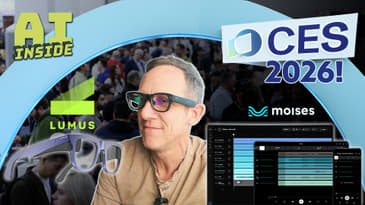
On this week’s AI Inside, Jason Howell takes CES 2026 as a test case for what happens when AI is treated (slightly) more like quiet infrastructure than flashy headline, as he walks through Samsung’s AI announcements, TCL’s Copilot powered Note A1 NXTPAPER tablet, Lumus' waveguide smartglasses display technology, and a wide ranging Moises interview that explores how AI music tools are reshaping practice, performance, and the ethics of training data for millions of creators. Guests include David Goldman, VP Marketing at Lumus and Ryan Merchant, head of global communications at Moises.
CHAPTERS:
00:00:00:13 - 00:00:23:20
Unknown
This episode of the AI inside podcast is sponsored by your 360. I get 10% off through the month of January 2026 when you use the code inside.
00:00:23:22 - 00:00:48:06
Unknown
Hello everybody! Welcome to another episode of the AI Inside Podcast, the show where we take a look at the AI that is layered throughout the world of technology. I'm Jason Howell, I'm in a hotel room. Obviously my audio sounds a little different. Apologies, but this is just the system that I have right now. I'm in Las Vegas, as you can probably hear from those those cars honking their horns furiously outside.
00:00:48:07 - 00:01:10:05
Unknown
Maybe you didn't hear that, but, for the Consumer Electronics Show, I've been here all week. If you see a few bags under my eyes, that is why, it has been a wonderful week here at CES. Has seen a lot of people, seen a lot of technology. You know, Vegas is a is just a really interesting, fascinating place.
00:01:10:05 - 00:01:28:21
Unknown
I don't know how many times I've been here for CES over the years at this point, but, you know, just the scale of everything. The fact that during a conference like CBS, you know, you have to be over here at 1:00 and then over there at 2:00 this time around, I kind of like tried to play it safe.
00:01:28:21 - 00:01:48:29
Unknown
And instead of 2:00 go at 230. And still the CBS gods were not shining upon me at times. It's just a really challenging environment, I have to say. But it's been a ton of fun. It's always a ton of fun because you get to see lots of familiar people. And more importantly, I mean, this is all about technology, right?
00:01:48:29 - 00:02:19:21
Unknown
So you get to see everything that is just incredibly cutting edge in the world of technology and that never lets it down, never lets me down. I'm always kind of seeing something new that I hadn't seen before. And I think one of the big stories of the Consumer Electronics Show, you know, in the past, I don't even know how many years, definitely more than just the last couple of years since, you know, like lems have really raised the awareness around what artificial intelligence actually is and that sort of stuff.
00:02:19:21 - 00:02:48:24
Unknown
But AI has just been a theme year after year after year and, hammering at home. You kind of expected that going into the Consumer Electronics Show this year, or at least I definitely expected that. When you go to these things, time after time, you become aware of the major themes that everybody is clearly locked into. And AI is this blanket terminology that applies to so many different things.
00:02:48:24 - 00:03:18:29
Unknown
So it feels a little too wide, reaching to say, oh, I was the theme of CES 2026 because AI is literally everywhere. Every company obviously realizes that they need to be on this bus because the busses is moving with or without them. And I think it's kind of been that way for a while. And this year, I don't know, I obviously everybody has their play.
00:03:19:02 - 00:03:37:24
Unknown
But it's less like I felt a little bit like it was less of a hey, this I think is pretty cool. Check out what we're doing with it. And it's kind of more settled a little bit where it's like, hey, yeah, we're using AI for this stuff, but this is the stuff. And, so I think I'm a little happy about that.
00:03:37:26 - 00:04:14:13
Unknown
I've, we've talked Jeff and I on the show, a number of times about, you know, when is the moment when artificial intelligence kind of fades a little bit into the background and just becomes, what are the cool things this does? And I wouldn't say that we're necessarily there. In fact, I would say that we are not there yet, but I think the, the constant like reminder of AI a bazillion times, personally, I noticed that they were leaning into it like they have in the past, but it just kind of felt a little more muted, if that makes sense.
00:04:14:13 - 00:04:31:22
Unknown
So, what have I seen while I'm here? And, and then, by the way, I've got a couple of really wonderful interviews that I've recorded, while I've been here, so that's coming up. But I thought before we jump into them, just to kind of round through and run through a little bit of what I've seen before, they kicked me out of the hotel room.
00:04:31:22 - 00:04:56:10
Unknown
Of course. Lots of devices. Yes. I've seen, you know, a lot of this stuff doesn't have anything to do with AI, at least explicitly, right? Like Samsung's, trifold smartphone. Got the chance to get my hands on that. That's a really cool device. I have to say. Really thin. I mean, I could totally see myself using it, although I had someone ask me last night like, yeah, it's cool, but do you need, need, need it, right?
00:04:56:10 - 00:05:11:02
Unknown
You know how many he likened it to? He's like, I had an iPad at one point, and I had it in my backpack and it just realized I was always carrying around this iPad and I never had a reason to use it. And then when I go to use it, the battery was dead because I just never used it.
00:05:11:02 - 00:05:29:28
Unknown
He was like, I feel like that's what would happen if I got one of these foldables. And I think he's probably right. I think the majority of people have no need for that. But it is cool and you're going to be paying the price for it and we don't know the price. I don't think, for the, for the trifold yet, but you can imagine it's going to be really expensive.
00:05:30:00 - 00:06:01:25
Unknown
That didn't really have anything explicitly to do, with I, but I went to TCL's booth at one point and actually not their booth. Their suite, and they were showing off a device called the note A1 next paper. And their next paper. Technology is a special type of display technology that kind of resembles E ink. It is not true E ink, but it is, you know, multiple layers of, of, technologies that they bake into the display and they kind of tone down the color spectrum.
00:06:01:28 - 00:06:28:21
Unknown
They make it really seem a lot like, like E ink without the known limitations of the ink, like the low refresh rate and that sort of stuff. Anyways, what does this have to do with AI? Well, the A1, the note A1 is a notes note taking device first. And so if you've heard of like the remarkable or the Kindle Scribe, it's one of those from TCL with this next paper technology.
00:06:28:21 - 00:06:48:15
Unknown
So you know it kind of falls into like this, you know, writing in a notebook sort of thing. It got a stylus, I think they call it the T Pen Pro that interacts with it. But what's cool from the AI perspective or notable anyways, is that, they've baked Microsoft Copilot into the experience. They've kept the the experience even though it's running Android.
00:06:48:15 - 00:07:13:01
Unknown
They've kept it really trim and really focused on just note taking, use cases and so and there was this really cool kind of specialized mode for it. It's like a triple use. I can't hear what they call it. But basically the screen was split into three different zones. One zone was your audio recording. So say you go into a meeting and you hit okay, record that zones recording.
00:07:13:06 - 00:07:44:28
Unknown
This other zone is your transcription live transcription. So everything passing through the recording also getting a transcription if you hit Start Transcribe. And then below that, the larger portion of the window is like the the bottom two thirds of the window is your pen environment for jotting down notes. So it was this whole integrated area combined together to make, you know, to take this idea that we're seeing a lot of right now, which is let's use AI to make contextualization around our meetings.
00:07:44:28 - 00:08:05:28
Unknown
Let's use AI to make that easier and to make it more effective. And this kind of had that and then a bunch of other stuff, and it was all happening on device. And I could totally see myself using that. If I say that I don't find myself very many sit down meetings these days because I work for myself, out of my house.
00:08:05:28 - 00:08:26:16
Unknown
But, you know, when I'm here at CES, that would have been really useful. So anyways, that's the TCL note A1 next paper. I do have an article on ZDNet for that. If you want to check it out, you can Samsung, I spoke a little bit about Samsung with the trifold, but they did have some AI related stuff that stood out to me.
00:08:26:19 - 00:08:49:07
Unknown
They, you know, had a, of course, a whole event called The First Look, where they showed off a lot of what they're doing right now. Yes, most of it has something to do with AI. So I could probably spend the entire hour talking about that. I'm not going to, but the things that stood out for me, they had this in their smart TVs and audio remover, capability with AI.
00:08:49:07 - 00:08:49:28
Unknown
So,
00:08:50:01 - 00:08:54:24
Unknown
On the other hand. Oh, okay.
00:08:54:27 - 00:09:00:08
Unknown
And so it actually is, you know, music.
00:09:00:10 - 00:09:21:06
Unknown
so think about and actually, one of the interviews today has to do directly with this, with a company called Moises. That's the second interview a little bit later. But think about some of these AI companies that are all about stripping apart audio or stripping apart music. Right. Here's a fully mixed soundtrack. Now I just want the drums.
00:09:21:06 - 00:09:48:00
Unknown
And so it's, you know, now these AI systems are very, very adept at pulling out different components or analyzing the audio and regenerating what it thinks. The isolated drums would be. Right. And, you know, again, Moises, we talk all about this in a little bit, but this is that, excuse me, this is that idea embedded into your smart TV, and you're probably like, why the heck I don't want to do that?
00:09:48:07 - 00:10:10:26
Unknown
But it's actually really cool, because when you think about watching TV, how many times I've been watching TV, like a sports broadcast is a primary example of this. Watching TV, watching the sports broadcast, the the audience noises is really loud, and I'm really clued in on the action and the announcer keeps butting in and I just want the announcer to go away.
00:10:10:26 - 00:10:28:25
Unknown
Just go away. I just want to watch the the football games and listen to the audience, listen to the crowd. This will allow you to do that. You know, this the examples that they showed off is like, you know, you're watching a music video and you can take the music away and it's just the vocals and that, okay.
00:10:28:25 - 00:10:48:19
Unknown
Like, I don't know how many people are actually going to do that other than to prove to themselves that it's possible, but real use cases, if you're, in, this is another one that I would totally do is, you know, often there are times where I'm watching a movie later at night and I have the volume low because I don't want to wake anybody up.
00:10:48:24 - 00:11:12:22
Unknown
And as a result, the dialog is too low based on the music or, you know, they're just kind of out of balance. So you could use this, excuse me, my voice is going to start going here in a second. Boy, apologies. And please forgive me if I do that a few more times because I don't have to type this out anyways.
00:11:12:25 - 00:11:34:15
Unknown
You know, imagine that you could rebalance. So it's not just about removing the audio, it's also about rebalancing it. So turn down the music 15% and, you know, the dialog stays at the same level that I can totally see myself using, I integrations into smart fridges. So I don't know that I need an AI to tell me that I love blueberries, but apparently there.
00:11:34:16 - 00:11:54:12
Unknown
I can do that. Oh, you really like blueberries? You should get some more blueberries. I think I know that I like blueberries. Thank you. I, they should have a freestyle plus projector. So this is just like a media projector, which kind of sounds boring and everything, but it could do some really cool things, through this, like onboard AI analysis.
00:11:54:14 - 00:12:14:22
Unknown
If you angle, you know, if you put it, usually when you use a projector, you got to find a flat white surface, right. Well, this thing, first of all, is really bright. But second, you could point it anywhere and it would analyze and kind of reposition itself. So like I pointed it into a corner like a ceiling and two walls, corner.
00:12:14:24 - 00:12:37:15
Unknown
And it knew how to straighten it so that that was like a rectangle, a perfect rectangle, almost perfect rectangle. I shown it or pointed it at a kind of like roughly, roughly, curtain. And after a few seconds it snapped in. It was able to even it out, so it was able to resize itself based around obstacles.
00:12:37:15 - 00:13:10:29
Unknown
So, you know, I pointed it out a wall where there were a bunch of pictures and it found the open space and said, this is the space for the projector. Really neat things like that. The other neat thing that I didn't show off in my short that I put on my channel is, that if your wall has a texture, not a texture, probably a texture, but if your wall has a print like a pattern print, it will analyze and then it will change the color profile on the projected image to essentially negate the pattern on the wall.
00:13:10:29 - 00:13:32:16
Unknown
So you end up with a normal picture. It was really interesting stuff. So I give him a lot of credit for that. Samsung had so many other things, I'm not going to get all into them. A few other AI things of note. The Versace smart ring, which I think I'm going to be getting one of those for review and I'll definitely talk about it on the channel, which is a smart ring, obviously.
00:13:32:19 - 00:14:00:25
Unknown
You know, pretty nicely built, reasonably attractive, smart ring. And it just has a single button. Its only purpose is audio recording, and it records long stretches of audio. I can't remember the amount of time, but I think, you know, at least a couple of hours, 3 or 4 hours, something like that. It is rechargeable battery. And, you know, you just you get used to wearing that thing and at the right time you're in a meeting and you're like, I want to record this records on the device.
00:14:01:01 - 00:14:23:28
Unknown
If it doesn't have a smartphone to connect to, it waits till it's connected and then transfers over. So you've got on device doesn't have to be connected to your smartphone. In other words, all the time along those lines, we've talked on the show about the Pebble Index oh one, which is similar, in many ways to the battery, except that is more kind of locked down to very short, clips of audio.
00:14:24:01 - 00:14:44:15
Unknown
And it's also not rechargeable. But I did get a chance to see that. Looks like a nice ring. I'm happy I preordered it. I'll be getting that sometime in the future. And then I would say one of the real big themes, and possibly it's because I'm looking for it a lot, are smart glasses. I'm just now realizing I left one of the glasses that I was going to show off.
00:14:44:17 - 00:15:10:06
Unknown
Over there, but I'm connected to audio with a live mic so you can still hear me even though I'm not on camera. As I walk through my hotel room. So one of the smart glasses that I'm testing right now, is the Ray neo X3 Pro smart glasses, binocular lenses. Very reflective. If you're watching the video version, you can see they're incredibly reflective.
00:15:10:08 - 00:15:37:10
Unknown
But yeah, these are, you know, really meant to, offer the full contextualization of the world, you know, interact with, with AI record video. There's even some games on here, you know, stereoscopic, view. Interesting. I, I'm definitely working on a review of these. I kind of wish they were a little more attractive. Like, they really do kind of have that, like, safety glasses factor to them.
00:15:37:10 - 00:16:06:07
Unknown
But anyways, there's that, Oh, boy. I left another thing over here. Oh, I really should have prepared more, but hey, I like I like the free flowing version of this podcast. Let's see here. Even realities has binocular glasses as well. These as you can see if you're watching the video version, by the way, on YouTube, we do have a YouTube channel.
00:16:06:07 - 00:16:30:16
Unknown
So you can see all this stuff. You can see that they're very lightweight and they're very thin. They're not like what we're used to seeing from, smart glasses these days. And they really are meant to be more standard glasses. The compute is hidden behind the ear on these little pads, which are not overwhelmingly huge. You know, they're behind your ear, so they kind of get hidden.
00:16:30:19 - 00:16:55:20
Unknown
And what you get is a binocular view, but it's not like full color representation or anything like that. It's kind of like Battlezone. It's like vector green vector graphic things. And so, you know, this, of course, interact with AI, contextualize, you know, everything that's going on, that sort of stuff. Let's see what else. Lenovo had a smart glasses prototype that I checked out.
00:16:55:23 - 00:17:20:07
Unknown
Infinix had AI glasses and AI glasses Pro. So the pros have cameras. The both of the glasses can support something ridiculous like 168 languages of translation, which indexes one awards around that. So, you know, when we're talking about themes from the Consumer Electronics Show, this is the big one. And maybe it was a big one because like, I'm just very aware of it right now.
00:17:20:07 - 00:17:44:10
Unknown
I'm looking to 2026 and wanting to increase my, my knowledge and understanding of smart glasses. I think it's a real big, interesting emerging technology right now. And, so it's kind of like when you get a car and then you realize everybody has that car because you're looking for it because it's part of your awareness. It's kind of like that with smart glasses, but it really does seem like every technology company is like, well, I guess we got to have smart glasses now.
00:17:44:13 - 00:18:10:11
Unknown
So, and then I didn't even talk about x. Real x real glasses aren't much I as much as they are just wearable glasses. That wearable displays, essentially. But I went to the booth and checked out their, AR1 glasses, which is a partnership with Asus ROG, Republic of Gaming. For, gaming glasses. Like really immersive but normal looking glasses, style gaming glasses.
00:18:10:11 - 00:18:28:09
Unknown
So lots of stuff at, the Consumer Electronics Show and I actually have a little bit more to do before I go to the hotel. I think I'm going to get kicked out of this. You go back home. Sorry to the, airport, and I'm going to get kicked out real soon. So
00:18:28:12 - 00:18:49:18
Unknown
I want to thank our patrons, because without you, we can't do this show. So thank you. Patrons. Patreon.com slash I inside show. We actually have a few new patrons on the channel. Brian Perry, Michael O'Hara, thank you so much for your support. Thank you for being here and for your, for your belief in what Jeff and I are doing with AI inside.
00:18:49:21 - 00:19:09:09
Unknown
Okay, going to take a break and thank the sponsor of this episode of AI inside, which is your 360 AI and last month I invited Jared Guralnick, who's CEO of your 360 AI on the podcast or actually not on the podcast, but on the podcast YouTube channel to demo the product. And I found it super compelling when we were going through it.
00:19:09:11 - 00:19:27:14
Unknown
Enough so that I'm actually finalizing my review now. Jeff Jarvis, Ron Richards, Tom Merritt, few others, provided a review for me. And while I've been here at CES, that report has been generated. I haven't had the time to look at it. So I'm going to do that. And I think on the next episode I can share my thoughts on what it said.
00:19:27:14 - 00:19:54:26
Unknown
Oh, I'm a little nervous, but here's what's really interesting about it. Lack of career development is the number one reason people quit a job, and yet most of us have never forgotten or never actually gotten that feedback. That's good enough to actually act on. And that's where your 360 really comes in clutch. It does something that wasn't possible even a few months ago, because we've got this massive, rapid adoption and development of AI right now.
00:19:55:01 - 00:20:19:23
Unknown
It uses voice AI to conduct real conversations with you and your colleagues, 15, 20 minutes each. And really diving deep into specifics your wins, your growth areas, everything. And then it synthesizes all of it and walks you through all those findings step by step in a coaching conversation. If you're a manager, it surfaces patterns across your team that you might never see in a standard survey.
00:20:19:29 - 00:20:33:20
Unknown
Really cool stuff, and I can't wait to see what it says about me. A m A drop Dropbox called the most helpful, actionable career advice they've ever gotten that's high praise. Start the year with real clarity at your 360. I use code inside
00:20:33:25 - 00:20:41:11
Unknown
for 10% off through January. That's your 360 AI code inside to get 10% off through January.
00:20:41:11 - 00:20:51:18
Unknown
And we thank them for their support of the AI inside podcast. Okay, quick break. And then we've got our first interview with a company called Loomis. Coming up next.
00:20:51:20 - 00:21:16:25
Unknown
All right. So one of the interviews that I recorded while I'm here in Vegas, that has to do with AI, is a company called Loomis. They're actually behind the wave guide technology that meta chose for its first display glasses. So, you know, they've got an amazing partner. They're doing something right. If Meta's tapping them and saying, we want to integrate your technology into our first display wearables.
00:21:16:28 - 00:21:40:28
Unknown
And here I spoke at length in their suite with David Goldman. He's the VP of marketing at Loomis. And we talk a lot about this area of wearable technology. And I'd say perhaps less from a state, you know, from a strict AI sense. But AI is, as you know, and we talked about all the time, foundational to these types of hardware form factors.
00:21:41:00 - 00:21:49:19
Unknown
And so I think it's a really interesting conversation. I think you'll find it interesting to hear. It is my conversation with David Goldman.
00:21:49:21 - 00:21:57:04
Unknown
All right, I'm in a fancy suite at The Venetian with David Goldman, VP of marketing for luminous. How are you doing, David? I'm doing great. How are you?
00:21:57:05 - 00:22:14:02
Unknown
I'm doing all right. You were telling me you, You're battling a little jet lag. I'm battling a little CFS. Whatever you. Fatigue, fatigue. I guess it would be fatigue. Man, my legs are so sore. Oh, I bet yeah. You probably. How how many steps you have so far? Oh, yesterday I think I had had like 18, 18, 18 case.
00:22:14:02 - 00:22:31:08
Unknown
But yes, it was like I know it was it's like one hotel away, right? Right, exactly. Well, I'm super excited to to sit down with you today and talk about, you know, all the cool things that are happening, here with Loomis. And, you know, I know that there was the the meta, vision. Oh, meta Ray-Ban display.
00:22:31:08 - 00:22:53:00
Unknown
Yeah, the Ray-Ban display. That's a good context setter because, you know, that's a that's a device that came out not very long ago, October and early technology is really driving the display portion of that. Right. That's right. We're the wave guide. You're the wave guy. That's that's powering the view. So what now that they're out and people are using them and everything.
00:22:53:02 - 00:23:14:27
Unknown
What have you learned about how that wider spread adoption of that device, like, you know, being for factors like this, like, what are you learning about how that's being received, how it's being used or surprises there. Yeah. So I probably can speak the least about I mean, we have a few and I've been using it. I can talk about my own personal, use cases, but in terms of the display, which is our end, right?
00:23:14:27 - 00:23:30:15
Unknown
We didn't do the whole system. I wish, I wish I could say we did. And that's kind of what that's that's what I'm. I think they really nailed it. I think it looks good. I think it feels good on the face. Yeah. Those are decisions that they made from also, the input with the wrist thing became second nature for me after like a day.
00:23:30:15 - 00:23:51:22
Unknown
Yeah. Because everyone at the company and we have about 100 people, at Loomis had to do the demos for them. So I've been through this a number of times, and I feel like the input, they really nailed it. On the display side, I think that, it's super bright. It's 5000 nits to the eye, which can compete with, daylight, you know, situations, all sorts of ambient lighting.
00:23:51:24 - 00:24:08:21
Unknown
You know, here, I almost wish we had a brighter room, but, 5000 nits is pretty impressive. And the other cool thing is that it's very private. You can't see that anyone's actually looking at it. That's important too. Yeah, it's a little weird when you're talking to someone and they've got a display, right? Yeah. There's like a little rainbow like of them holding a phone.
00:24:08:24 - 00:24:28:21
Unknown
Right. Exactly. We don't want and nobody wants that because I think it's super important for acceptance. They decided to come out with, entry point product with one display. So it's the right eye only. So, you know, but there's a lot of utility. I find my favorite thing to use is WhatsApp. I use WhatsApp when I'm walking, and that way I can just do everything by dictate.
00:24:28:21 - 00:24:43:14
Unknown
I don't have to look at my watch. Even I don't have to take out my phone. And I can just, like, talk to my wife while I'm walking. And, it works amazingly well with the, input device with the rest, controller. Yeah. So, but also the caption thing, the live captioning. I don't know if you had a chance to try it.
00:24:43:14 - 00:24:59:20
Unknown
Translation not on these particular device. On other devices. Yeah. So so it's cool. You're looking at the person and you can actually see what they're saying. And if you're in a loud environment like see, show floor, that's key. And it's only who's who you're looking at. So somebody is right over here. You don't get that cross noise.
00:24:59:26 - 00:25:33:01
Unknown
So I think they really nailed it. So yeah. And people are we we're really happy with the feedback. I mean, the feedback on the display side has been incredible. And I mean, what a what a partnership. Yeah. Right. Because when I as I've been walking through the show floor and everybody has glasses now. Yeah, I think a large part of the reason for that, or at least a definitely a significant part of the reason why everybody feels like they need to be there is because meta is proving to a certain degree that this is a viable product category, that there is consumer consumption appetite, for sure.
00:25:33:01 - 00:25:54:00
Unknown
Right. Your your display is driving it. That's huge feather. We're super, super proud. You know it was obviously something we couldn't mention for, for for a quite a bit of time. But, yeah. And we learned a lot, working with our team, you know, the feedback that you get from working with a customer like that is incredible, not only for that product, but for future products for us.
00:25:54:00 - 00:26:08:27
Unknown
Sure. We take it all into account. But yeah, an incredible journey. And we're still we still got a lot of, a lot of, room to grow. Well, and that's and that's exactly what we're going to talk about. So let's definitely dive in. You've learned a lot of lessons from there. I think we have to talk about Zoe.
00:26:08:27 - 00:26:31:08
Unknown
Is it Zoe or Zo? It's Zoe. So we call that's what we call what I figured out what's been the what was like the real breakthrough for your team that opened the door for this? What? What is, you know, a very wide field of view for this particular type of category. Yeah. So there's a few headlines here. This year, what we're really showing are the next generation wave guides like everybody sees, okay, we're in a consumer device.
00:26:31:14 - 00:26:51:21
Unknown
So hopefully we build some credibility in the market. We're showing up here today with a very, very early prototype of a 70 degree field of view. We're using geometric waveguide. So we're not doing this with any exotic material. It's basic glass. Basic optics, you know, materials and machines that are used to make it, which is important, you know, in terms of keeping the cost down.
00:26:51:24 - 00:27:16:18
Unknown
And we're achieving an incredible field of view. Very immersive. Not for your everyday notification application, but more, you know, probably gaming, probably like holodeck, multiple like your workspace where you can have multiple windows open. Super important. Also defense companies very interested in that for foot soldiers. Having a very, very immersive field of view. We're also here to show a, thin wave guide, which is something we've been working on.
00:27:16:18 - 00:27:36:04
Unknown
We have thinner, lighter waveguides that are going to be coming down the pike soon. And that's important because it also is easier for us to manufacture, bringing the costs down, you know, as wasn't so easy to manufacture. So it's a it's probably a longer conversation. But the truth is, is that we have a very simplified process when it comes to the manufacturing.
00:27:36:04 - 00:27:52:29
Unknown
There are a couple steps that we're able to lose when we do a thinner waveguide. And so by reducing the number of steps we're able to make it. And we're also able to get a lot more yield. Think about it. You're ordering the substrate the materials the glass. Now you can get if you're using a thinner waveguide, you're able to get a lot more waveguides for the glass that you're using.
00:27:53:03 - 00:28:13:15
Unknown
So that already lowers the cost just on the, you know, raw materials. Sure. So and also we've been able to optimize an existing, product device, which is the 30 degrees field of view. You'll try it on. It's a pretty it feels a lot bigger because it's a one by one aspect ratio. So you've got like a tall image and it's, and for a lot of users, that's plenty big.
00:28:13:18 - 00:28:34:14
Unknown
You know, not everybody wants to have like a 70 degree field of view. It's not it's not necessary for the notification, sort of. Yeah. Application. Yeah. And I think that was that was kind of one of the questions that that popped up for me around that much wider field of view versus the narrow one we're talking about, like all day, every day, throw them out at the beginning and, you know, take them off at the end.
00:28:34:16 - 00:28:57:18
Unknown
Do I as a wearer, really want that? The super wide view, when I'm out walking the street, and I guess my question there is like, what are the use cases that this opens up? I mean, I can imagine are overlays potentially if the hardware is capable enough for sure driving, that might be something. It's not that there's always this wide screen blocking your view all the time.
00:28:57:18 - 00:29:15:04
Unknown
Right, right, right. And it's transparent. That's an important thing to remember. So you're looking at a you're looking at digital content but it is transparent. Obviously you jacked the brightness up on a white background. It's it's more opaque. And you wouldn't do that while you're driving, for example. It's hard to say what the use case is because we have to see what these the end system is.
00:29:15:06 - 00:29:35:18
Unknown
We're providing the optical engine or in some cases just the waveguide. But then our customer builds the ancestor and then they determine how many sensors are on it, what use cases they had in mind when they decided to use us. So it's hard for me to say, like what those use cases are. I have some ideas, like, I mean, like we just we create the technology to figure out, like cool things that do may have.
00:29:35:18 - 00:29:55:00
Unknown
And I think that they're really they spend a lot of time thinking about that. And they also guard it very, very carefully in terms of where what they're but we get a sense of what they're after based on, you know, the feedback they give us. Yeah. So yeah, I think that there's, and it depends like if the end system is going to, you know, end up being in the glasses form factor and, it could be a workstation.
00:29:55:07 - 00:30:11:04
Unknown
I'm a big advocate of, you know, like you said, not using the entire field of view all the time. You might not need to you can you can use a subset of that field of view that also matters very much for battery resource. And that's something what makes our waveguides. One of our key advantages is that we're more efficient.
00:30:11:04 - 00:30:32:01
Unknown
And hence the battery life is longer. When you're using a geometric waveguide versus, an alternative. Oh, okay. Yeah, it's a more straightforward, path that the light takes. Yeah. And because we're using mirrors instead of, like, the refractive elements, we're able to actually preserve the color, and we have less loss, less, first order and second order loss with the path of light through the waveguide.
00:30:32:01 - 00:30:49:22
Unknown
I can explain that just simply here. Is that the way it works as a geometric or reflective waveguide has two sets of partially reflective mirrors. Two arrays. Really? And you really can't see at all the second set. They're they're basically completely invisible at certain angles. You can see the first set. Yeah. Because the first set. Yeah.
00:30:49:22 - 00:31:12:07
Unknown
Right. And so a lot of times, like in the mirror Ray-Ban displays, you can see that it's over here on the side. Yeah. Sort of out of the way. You don't you don't notice it at all when you're wearing it. Of course. And we inject the image here through a prism or a mirror, and then it gets expanded along two axis, like the x and y axis, because you first have to take the small image, expand it, and then the, the mirrors actually are the, output to the eye.
00:31:12:09 - 00:31:34:08
Unknown
So that's how it works. And you know, this is like I said, this is a super thin one. But that's the basic architecture of our, of our waveguides. And they're very different than the competing solutions. Okay, okay. What is, you know, on some of these glasses, I've noticed that there's a lot of, when someone's wearing them and there's a display, like, obviously the wearer sees the display.
00:31:34:12 - 00:31:52:23
Unknown
They hope that the person on the other side doesn't see this. This is the right question. Like, that's. But that's happening, and it can be a little awkward, as we were just taught for sure. For sure. Like my understanding is that these are kind of avoiding that or they are amazing. They definitely I don't I don't think anyone has zero what what we call waveguide leakage or forward projection.
00:31:52:25 - 00:32:08:26
Unknown
But we're I think as close to zero. And that's, that's actually inherent in the technology. It's not because we're any smarter than any of the other teams out there. They're really, really talented people. They're always improving this problem. But I think just as a starting point, we have a huge advantage because it just it's very minimal to start off with.
00:32:08:27 - 00:32:27:10
Unknown
Yeah. Then you put on something called an AR coating like anti-reflective coating. And that actually reduces it to like less than 1% I think over here. So it's negligible. Like you really don't see it. I think the other guys have ways of engineering it by sort of aiming the image down a bit or, you know, I'm not exactly sure how they're minimizing it, but it's a, it's privacy's key.
00:32:27:11 - 00:32:42:25
Unknown
You don't want to look weird when you're wearing glasses. Yeah. And you want to pass. It's not just also about looking weird. I mean, that is a big part of it, right? And that's that's why these, you know, the frames, like the metas that actually look like normal glasses, that's why it's getting a lot of pickup, because now it doesn't look like you're putting technology in your face.
00:32:43:01 - 00:33:03:03
Unknown
But it is also about privacy because hundred you might be looking at something very important, something very specific, a code or I don't know what it is. Yeah, whatever it is and you know, you yeah, the person on the other end is just really good at reading things backwards. I mean, that's the feedback we're hearing because we're obviously we're we're so happy with the feedback that we've seen overall for the system and very happy for the meta team.
00:33:03:06 - 00:33:22:24
Unknown
Yeah. But we're paying special attention to what's the feedback on the optics. And that's been really, really positive. I think what they're really impressed with is both the brightness of the image, 5000 nits to the eye. That's really impressive. As well as, the privacy that we're speaking about now. So those are two things that I think are critical for, acceptance in the consumer market.
00:33:22:25 - 00:33:39:15
Unknown
Okay. Because you got to be daylight readable, like otherwise 100%. Yeah, yeah. You're wearing these everywhere. You kind of work everywhere. And also the brightness is sort of the other side of the of the brightness is the efficiency. And so I think it's now six hours mixed use. Right. And you know, obviously they're going to be optimizing for that and making it longer and longer.
00:33:39:15 - 00:34:05:15
Unknown
But to the degree that you can have a bright image without jacking up the the resource too much. Yeah. It's critical. Yeah. Yeah, indeed. What about prescription lens challenges? Prescription. That's a great question. And not only that, actually, it's pretty. It might be even tied into this, but also the kind of shaded shaded transition. So the nice thing about our, waveguides is that as far as we know, they're the only ones that you can directly bond your prescription to.
00:34:05:18 - 00:34:22:08
Unknown
So why is that important? There's a few reasons. Like one, if you have to use something called an air gap, which is possible. It's a, it's it's sort of a thicker system. Right. Like because instead of being directly bonded and structure, you know, the structural integrity is there. It's actually rigid when it's directly bonded just using an adhesive.
00:34:22:13 - 00:34:41:05
Unknown
You actually now have to have air on either side. So you've got to encapsulate it. That moisture can get in there. Dust can get in there. Yeah. So it's it's it's a lot better to be able to directly bond. And you talked about the dimming. You can directly bond that. We have something called push pull which allows you to bring the content a lot closer like a meter meter and a half away.
00:34:41:05 - 00:34:58:03
Unknown
If that's ideal. And that can just be a -0.5 and a plus point five diopter that's on either side, directly bonded. It looks super thin. I mean, I've got a system over here I can show you. You don't notice it at all. So that's critical. So I think that, as far as we know, we're the only waveguide that you can do that for us directly.
00:34:58:03 - 00:35:19:29
Unknown
Bond layer to, I think it's 70% of the population has some sort of correction. Yeah. You wear contacts. That's one thing. Totally. No, I mean and and it's definitely a I know it's a criticism of people that, you know, realize with some of these solutions that you actually have to get like a separate like lens that you wear behind it, you know, like, for example, we don't do for systems.
00:35:19:29 - 00:35:34:03
Unknown
And when you're trying these on, I don't know if you have any correction, but I wear contacts. Okay. So that's that's good for this job. Yeah. But we actually do have clip ins that we use here because we can't know what your prescription is obviously ahead of time, but if you could, you could directly bond it in.
00:35:34:03 - 00:35:40:19
Unknown
And, you know, that's an incredible degree of freedom. Cool. Yeah. All right, well, should we take a look? Yeah, absolutely.
00:35:40:21 - 00:35:47:29
Unknown
yeah. Oh, okay. There we go. Yeah. There we go. All right. So we'll put these on go. Yeah. And we're going to show you some test patterns.
00:35:47:29 - 00:36:10:00
Unknown
And then that looks really good. Yeah. So you want to pay attention to the color because like I said we're using mirrors which preserves the color. Right. Because it's just reflecting. Yeah. In the in the context of your current announcements, where do these set. So these are the optimized Z 30 z. That means that like whatever we've shown in the past, had it was actually impressive brightness and efficiency.
00:36:10:00 - 00:36:31:17
Unknown
But now we've dramatically improved that. Okay. So that's 8000 nits to the what. So that's a metric. That is yeah. We can show you a white background, but why do we care about white balance and white backgrounds if I'm reading something on Z net, for example, like I need a white background to read against, what we find with a lot of the competition is that there's like a kind of rain blowing effect that goes on.
00:36:31:19 - 00:36:46:04
Unknown
The white isn't really white, it's kind of purple. Orange. I want to show you some text so you can actually see, I mean, and you should be able to read. No, that's a dense amount of small tax. Yeah, I could totally read. Yeah. We wanted to use like a small font. This is I think Alice in Wonderland like yeah.
00:36:46:06 - 00:37:02:23
Unknown
With some typos. Apparently her own mind. Okay. Yeah. All right. Let's see. And then this is again a test pattern where a lot of times they're going to show you content that they're trying to hide their problems. But we're showing these difficult test patterns with, for example, white background 8.5. So you can see that you can actually read that.
00:37:02:25 - 00:37:20:29
Unknown
Absolutely can. Yeah I can read all the eight point. That's that's really impressive. And I mean it's bright enough that yes this is transparent. Yes, I can see through it. But when that bright is on yeah it's mostly a wall and I don't see anything like when I'm looking at you. I see your eyes perfectly. Yeah. So that's that's another thing you can do.
00:37:20:29 - 00:37:42:22
Unknown
I've watched through the avatar wearing our glasses that, you cannot see test. You can not see anything you're looking like directly at my eyes. That's. Here's some just, like, some fun, you know, Muppets. Yeah. Okay. And this is. And this is more kind of like the stereoscopic. Exactly like we want to give. Sorry. Want to give, like, a feel of, like, you know, because black is transparent in are so this way it looks like it's floating.
00:37:42:24 - 00:38:00:02
Unknown
And then just to give you an idea of the color, that's, that's really. Yeah. This this look really pretty. Yeah. On the next one, the 70, I'm going to show you a video. So you can actually, see some moving content. But it's a, you can find more problems on the still content videos like dragons flying around. Yeah.
00:38:00:04 - 00:38:16:22
Unknown
Very easy to like mask all the problems. Totally quality. But we're not trying to hide your attention. Yeah, yeah. So that looks really good. Okay. Very, very nice. And the enemy and this is the optical engine. If you want to show the viewers like that's what's sitting in your eye. As you can see, the projector is quite small, very lightweight.
00:38:16:22 - 00:38:37:12
Unknown
And that fits into the frame of the, glasses. And that's 30 degrees. So the meta Ray-Ban displays are using a 20 degree field of view. Here. We're we're showing you 30 degrees and it's, it's meaningfully, a larger. Yeah indeed. Very, very nice. Okay. So we can take these off and move over to the 70.
00:38:37:15 - 00:38:38:24
Unknown
All right. Okay. All right.
00:38:38:26 - 00:38:57:07
Unknown
So this I'm going to be super, super gentle with this is our only system right now. We lost two already. Oh, no. Because, I dropped one. That was my bad. The other one. One eyes of my nose. Okay. All right. So is the. I'm going to make contact, and now I've got an image. It's like a floating cyberpunk ship.
00:38:57:07 - 00:39:18:17
Unknown
Or. Exactly cyberpunk. Exactly. Sort of Baron Munchausen. Yes. There we go. Airship. Yeah. So what you're looking at is the earliest prototype that we're showing publicly of 70 degrees. Now, you can see I want to also show you some content. But you know, now it's zooming in. Yeah. So that's filling up more of your field of view because here we can't really tell just how wide the field of view is.
00:39:18:17 - 00:39:37:00
Unknown
So let me show you a still image that gives you a sense of just how big it is, like a wrap around display. Yeah. That is that's really, and this is some of the, some of the same images that you've seen and the clarity and the colorful again, like this are the images. Now let's look at the test patterns.
00:39:37:00 - 00:40:03:01
Unknown
I think they're over here. Yeah. This one. This one okay. Yeah I mean this is this is sharper than the other one. It's actually not but I'm glad that you said that and should put that in our story is so interesting to me is. Yeah. Yeah, yeah. Suddenly look sharp. You know, that's it's really interesting that you say that because a lot of times and we learn this by working with meta and other companies, is that, you know, they measure, you're measuring everything you have to measure in order to improve.
00:40:03:01 - 00:40:21:11
Unknown
You don't you can't improve if you don't have a measurement. Right? Yeah. On the other hand, there sometimes solving problems that the consumer can't notice. And so it's certain parameters matter very, very much. And it's been a surprise in some cases which ones don't. So I think that that's that's a lot of the key learning is like okay, we we always want to improve it.
00:40:21:11 - 00:40:38:09
Unknown
We always want to make it better. But certain things that we thought were important, it turns out they're not noticeable. They're noticeable to cameras and measuring devices. They're not noticeable to the human eye. Sure. So this this actually has this isn't as bright as the other system. The resolution, is this is 1080 which what is the resolution.
00:40:38:11 - 00:41:03:11
Unknown
And it's seven ADP and AP okay. It's still it looks really sharp and it's very large. I mean the the wide field of view is what this is all about. And yeah that's really impressive Looks really good. I want to show you one more thing. Sure. Which is that, when it comes to next generation, we've also been working with, micro display called micro LED, which is sort of like the, you know, people believe it's going to be the future.
00:41:03:13 - 00:41:20:09
Unknown
This has not been shaped, but so the we've got is like in this rectangle form, but this is a working prototype. And I just want you to see how small the projector is on this. It's almost like a tech need of, oh yeah, let's take this off. This thing is off because the field view is so wide that you can't actually, I can't see anything right?
00:41:20:09 - 00:41:45:05
Unknown
Right now. Right. So let's see, just so you can see. Yeah. Just how small this is a real working projector, micro OLED. Yeah. So eventually you can see how that melts into any frame. Almost. Let's see here. So that's like kind of next generation stuff that we have when micro led though when the market for full color is ready we've got a solution very nice.
00:41:45:05 - 00:41:49:14
Unknown
And we have advantages when it comes to that technology as well. Wonderful. Yeah.
00:41:49:16 - 00:42:05:11
Unknown
Well, that was awesome. Thank you so much for allowing me to put all these glasses on my face and really, like, legitimately see, look into the future. Yeah. The future looking glass or. I don't know, I could probably get very poetic about that, but, exciting space to be so tied in and involved with.
00:42:05:11 - 00:42:15:16
Unknown
And you guys are doing some really cool things. So I just want to thank you for your time. Appreciate it. No, it's a pleasure. Excellent. Best of luck and I'm sure enjoy the rest of the show. We'll do all right. Take care.
00:42:15:18 - 00:42:34:05
Unknown
All right. Thanks again to the folks at Loomis for setting that up. Super fascinating. And I can't wait to see what that, you know, what hardware that especially that wide field of view ends up in. It was really cool to see that first hand. And it's also nice and enjoyable to get like an inside scoop on early prototype hardware like that.
00:42:34:05 - 00:42:54:26
Unknown
It feels a little special. All right. By the way, if you're listening to this and you're like, what did that look like? Well, you can go to our YouTube channel, youtube.com, slash at AI Inside Show, or just go to YouTube and just search for AI Inside Show. That's probably the easiest way to do it. You can catch all of our episodes in video, and if you have one of these glasses, maybe you can even watch it in the glasses too, I don't know.
00:42:55:03 - 00:43:02:17
Unknown
All right, quick break, then we're going to come back with another interview with a company called voices.
00:43:02:20 - 00:43:23:09
Unknown
All right. Day one, which at this point feels like an eternity ago. I went in the evening to this unveiled. It's a big press event where there are a bunch of companies in a single space. So it just kind of makes, understanding the wide scope of what's possible and accessible at CES, immediate, because you don't have to go to a million halls to see a bunch of really cool stuff.
00:43:23:12 - 00:43:55:26
Unknown
And I was walking along, I look up and I recognize the logo for Moises. Moises is a company that's been on my radar for a little while now as a musician looking to work and, and kind of, experiment with AI systems from a collaborative approach perspective with my music. Moises is one of the companies doing some really interesting things there involving Stem separation of music into a whole different, you know, different tracks and then allowing you to kind of rehearse music.
00:43:55:26 - 00:44:13:09
Unknown
So if I'm a bass player and I want to practice the bass line for a thing, I can strip out the bass to understand it or strip out the bass and then the remaining tracks, I practice my bass with it, or there's a million different things you could do with this as a musician. Ryan Merchant is head of global communications at Moises.
00:44:13:09 - 00:44:22:13
Unknown
He was on hand. And so I was like, hey, you want to talk about this for a little bit? I love these topics. I hope you enjoy it too. Here's my conversation with Ryan.
00:44:22:16 - 00:44:30:28
Unknown
I'm here as CTS have come. Such a fun event because I get to see all sorts of companies that I've heard of and some that I haven't heard of.
00:44:30:29 - 00:44:53:19
Unknown
In this case, I've definitely heard of Moises here. I'm with Ryan Merchant, head of global communications for Moises. And Ryan, thank you so much for being here. It's awesome. So on AI and inside we talk all about all of the facets of artificial intelligence the good, the bad, everything in between. And I am kind of like the music tech guy.
00:44:53:20 - 00:45:18:03
Unknown
Yeah. And I'm familiar with Moises, though I have not used it yet. So I guess give me like your short kind of spiel on what Moises is and why it's different in the music tech space related to. Yeah, yeah. So Moises is an AI music suite essentially to help you practice, produce, create, learn, remix, edit everything you want to do with music all available on the product across desktop, web and mobile as well.
00:45:18:05 - 00:45:42:14
Unknown
The bread and butter is a stem separation that we have, but we also have a host of products he detection, BPM, lyrics, transcription, AI mixing and mastering. And the big thing we launch back in August is our AI studio, which is our generative AI element that creates instrumentals using prompting, and their context aware, which means you have a song that's a hip hop song, you have a song that's a dance song.
00:45:42:16 - 00:46:05:00
Unknown
Maybe it has a Latin flavor. Those instrumentals are going to match that style. They're going to be in BPM and in the same key as well. Wow. Okay, so, I only recently, began working with a couple of friends and in a band, it's a cover band for a band called Ween. Are you familiar with Wayne? I'm not familiar with Wayne, I, I don't I forgive you for that.
00:46:05:03 - 00:46:21:08
Unknown
There a while ago, a very unique bad guy. But anyways, I'm, like, in this position where, like, suddenly, like, I'm not like, I wouldn't consider myself a keyboard player, but suddenly I'm playing keyboards for this thing. I had to learn this whole back catalog. Yeah. And it kind of strikes me that, like, Moises is like a really great tool for that.
00:46:21:09 - 00:46:49:08
Unknown
Yeah. Like, is it possible to take songs like that that exist and break them down into the pieces and then make it so that I can rehearse my keyboard parts with this because of the assistive qualities of AI? Yeah, absolutely. And that's actually how the company got started. So our CEO and founder is a drummer. He wanted to learn drum parts, and so he essentially created software that could separate the stems, the instrumentals, turn down the drums and learn to play the drums.
00:46:49:12 - 00:47:18:07
Unknown
So he created that over a weekend, posted it on Product Hunt, had about 50,000 downloads in a matter of weeks. Quit his job. The rest is history. Now we have 70 million users, so learning music and practicing music, that's the core. The bread and butter of Moises. Yeah. Kind of. Another anecdote is the band Slipknot. Their drummer, Eloy Casagrande actually got the role with Slipknot for their new drummer by using Moises to turn down the drums, learn dozens of their songs and go across his audition.
00:47:18:10 - 00:47:42:29
Unknown
Yeah. Okay, so what is the, so, like, we're so used to, right? Kind. I could go a million different directions with us, but we're so used to right now in the world of generative AI and rights and, you know, all this stuff, like when I take a Slipknot song and I feed it into a system like Moises, what what am I looking at from like a writes kind of, I don't know, collision perspective as far as that's concerned.
00:47:42:29 - 00:48:03:10
Unknown
Am I bumping up into anything that is, not good. Not good from a user standpoint? And then what position does that put you guys in? Voices. And yeah. Good question. So if you're just using it as a tool right. That's all we are. And you're not publishing that music. That's a pick your band Slipknot Taylor Swift the weekend.
00:48:03:10 - 00:48:24:00
Unknown
Yeah. Obviously if you're going to use the product, create a remix, do an edit, post that on YouTube, you're going to get in trouble because big copyright elements just publishing it exactly out there. Yeah. And if we're just a tool though, think of it like Photoshop, right. You could take a photograph, go in there, edit, make some changes and just have that photo in there and use it as a tool.
00:48:24:02 - 00:48:52:08
Unknown
Moises is just a tool. So there's not going to be any copyright restrictions. Their songs are respecting the rights of the of the artist or the rights holder. And don't use that material externally. A publisher. Sure. Okay. All right. And yeah. So, so where do we want to go with this? So how are people like by and large now that this is like building out and, you know, obviously launched a product and it was a certain thing probably then it's probably I imagine it is expanded.
00:48:52:08 - 00:49:12:29
Unknown
When did it first launch on product 2019. So close to six years. Yeah, it was a while before kind of this model. Exactly. Yeah. Think of with generative AI for us two three years. Me correct. Yeah. So what was it then? You started out as stem separation. That was just the core bread and butter. Now we have a host of features related to that.
00:49:13:01 - 00:49:33:29
Unknown
The key detection, lyrics, transcription, editing, mixing, mastering and the general studio that I mentioned is our latest release. That's really going to be the future as well. We like to say, you know, ChatGPT is about three years old now. If you look at what ChatGPT did in November of 2022, what it does now, just, I mean, night and day difference.
00:49:33:29 - 00:50:02:22
Unknown
And so our generative AI studio is ChatGPT volume one for us, right? Version one for us. And so we're looking out to the future. We kind of see everybody with a smartphone as being a musical creator. And then the same way, you know, 20 years ago, if you wanted to make a film or a movie, you probably needed to go to film school, have expensive film equipment, have a crew, then take all that footage, go to post-production, have the hardware there, have the software, and then have a distribution system to put the film out.
00:50:02:24 - 00:50:23:16
Unknown
Now I can take my phone, shoot a video here, edit it on the phone, posted on YouTube the same day I'm a filmmaker. We think that's where music is headed, and that's kind of how we envision the platform as being the all in one central hub for creation, editing, distribution, for music going forward. Okay, well, you've got it on your sign behind you.
00:50:23:16 - 00:50:46:19
Unknown
I don't know if the video can pick it up, but ethical is is a word. Yeah. Thumbs up. Yeah, yeah. Often on our podcast. Yeah it's really important here. Yeah I think the okay if I'm going to be completely honest the challenge with ethical AI. Yeah. Which is not a challenge because I respect ethics in AI. But I've also used services that you probably can't comment on.
00:50:46:20 - 00:51:17:13
Unknown
Yeah. You know, whatever. But as far as we know, has probably trained their system on massive amounts of data that maybe they probably didn't have access like legitimate access to unethical. Yeah, you said it, not me. Yeah. Okay. Exactly. That's why I'm spelling it out. But you take us, you know, where are you taking you the a and the quality that's able to do because it has that massive deficit data and the quality is usually really, really good, which is not a dig on ethical.
00:51:17:13 - 00:51:36:26
Unknown
Ethical is really important. Yeah. But at the end of the day, what's also important is the quality of what you get out of the other side. How does Moises, face that or. Yeah, I would say even in terms of these other products, the output I think could be a bit hit or miss. I also think going forward, some of the products you mentioned have been enthralled in multiple lawsuits.
00:51:36:26 - 00:51:57:04
Unknown
Yes. Have settled those lawsuits and now having to heavily iterate their product offering in terms of what they can actually output, how that output can be used. Yeah. So I think that's a major differentiator. I would say our quality, I think, is at par with some of the other products in terms of the AI generation. I think, you know, we use a model called context aware.
00:51:57:04 - 00:52:18:15
Unknown
Meaning when you're using our AI generation, it's going to take the style of music you have BPM, tempo, key, all of that. And then output something to match that. Yeah. So we like to say these other products are creating music for you. We're helping you create music. I think that's a broad differentiator. Back to the ethical side of that.
00:52:18:18 - 00:52:40:10
Unknown
You know, we didn't scrape the internet, all of our, our AI models, over 50 of them are all ethically trained. So we hired dozens of musicians to go into the studio for thousands and thousands of hours, trained on that content, had some other licensed partners as well. No active lawsuits, haven't been sued by any major record labels, go on record labels around the world.
00:52:40:11 - 00:52:59:06
Unknown
Yeah. And it's always been artists first year. We have 100 employees. Everybody in our company is an active musician. We're not a bunch of tech bros who decided this is a good vertical to make money. We're passionate about it. I'm a DJ, I remix, I produce, we built a product that musicians want to use and that respects musicians rights.
00:52:59:08 - 00:53:19:29
Unknown
And that's at the core of what we do, and we think that's the long term winning strategy, just in terms of the right thing to do in the best business model. And it's going to give us the best product because it's musicians making a product that they want to use as well. Well, when I think about like being a musician and let's put it in air quotes collaboration, because that kind of humanizes the AI to a certain degree.
00:53:19:29 - 00:53:45:29
Unknown
And, you know, definitely keep a friend frown upon that. But the collaborative kind of quality of these tools, if, if I can get in there and I can bat an idea back and forth with this thing, and it can jog my kind of creativity into a certain direction is something that I didn't think about. Or when you're a musician, you know, we often in the recording studio, we're thinking in terms of tracks.
00:53:46:01 - 00:54:06:09
Unknown
Yeah, we're thinking in terms of a specific instrument. I want a baseline for this, or I want a key to go over the top of this thing. And a lot of the solutions, like studio, like audio, are about full tracks for music bets. And it kind of strikes me that Moises seems to kind of take a more musician centric offer.
00:54:06:09 - 00:54:26:22
Unknown
Absolutely. Where it's like, no, you know what? The thing that I need is this, and what it gives me might not be the thing I use, but it might be the thing that I'm inspired by to create the thing that I. Absolutely. Yeah. And I think for me, just speaking from my musical experience, I'm not classically trained in any instruments, but I still produce and create, so I'm pretty good at drums.
00:54:26:24 - 00:54:51:29
Unknown
But anything involving chords since keys not my forte. And because I'm in dance music, that's really important for progression so I can build out drum drum sets, fills, etc. even some guitar, some string elements, put it in Moises and say, hey, like I need some dope sense in a progressive house style that are really club friendly. It's going to work with me to help create those.
00:54:51:29 - 00:55:08:06
Unknown
And I think as a musician, that's the thing that we want, right? I think most of us go in the studio, go to our doors. We have a pretty good idea. Maybe it's a guitar riff, maybe it's a, it's, a drum fill. We want to build the rest of it. And I think that helps get past the writer's block.
00:55:08:06 - 00:55:21:03
Unknown
The musicians lock, if you will, and build out that song that you want, that you hear in your head. Right. Because we often always we hear the song in our head and we know we want to sound like. But how do we get there when we have five out of the six parts and we're missing that one part?
00:55:21:03 - 00:55:49:08
Unknown
Yeah, yeah. Not not only just the thing that's in your head, it's about kind of writing that way. The inspiration, being in the moment, being inspired, not hitting that roadblock. Yeah. As I were for tools like what you're talking about here with voices. I realize that it can be a really useful tool to help kind of smooth and smoothen me through those roadblocks and keep me alive in the process.
00:55:49:08 - 00:56:05:26
Unknown
And which is interesting because this is not a life. It's I was a gig on it. We always say, you know, empowering, creative potential has been the company's mission for a while. Yeah. And that's what I like because I think creators, you know, we have a vision like you. You're you're in. I'm out. I created in the shower.
00:56:05:26 - 00:56:25:01
Unknown
My best ideas are there. Yeah, I hear the drums. I know what I want to get there, but but even, you know, friends who had 20 instruments, they could play. I'm pretty sure he was stumped at times and was like, dang, I wish I could create this little guitar rift here. Yeah, if he had had this, just think of like I mean so bad example Prince create.
00:56:25:01 - 00:56:40:06
Unknown
Everything you did was amazing. I mean Prince amazing. Yeah, he probably, for example he is essentially. But it is way. But if friends add this just to give more music, what else would you. What else would a prince of our. Yeah, yeah. Ryan, thank you so much for talking to me about Moises. If people want to find out more about working, they got simple.
00:56:40:06 - 00:56:46:02
Unknown
Moises, why we're there. Makes sense. Yeah. Okay. Yeah. Intuitive. Thanks, man. It's a pleasure. Awesome.
00:56:46:05 - 00:57:07:16
Unknown
Thanks once again to our guests, David Goldman at Loomis and Ryan Merchant at was this, fun, fantastic time. I also want to give a huge thank you to the folks at CTA. They sponsored my travel here, so they paid for my flight. They paid for my hotel room that I'm recording this in. So a huge thank you to CTA for making it possible for me to go to CSS this year.
00:57:07:16 - 00:57:24:13
Unknown
Seriously, I don't know that I would have been able to pull it off. I certainly wouldn't wouldn't have been able to pull it off as comfortably as I was able to because of their support, their travel support. So thank you, CTA. Don't forget you can go to Ironside Dot show for all of the information about this show.
00:57:24:13 - 00:57:53:05
Unknown
If you want to find what Jeff is up to, go. Jeff jarvis.com patrons can, you know, find our offerings at Patreon.com mi insight show. We have all sorts of, you know, little perks there ad free episodes, discord, community access, an AI inside t shirt when you become an executive producer like Doctor Du, Jeffrey Merry Chimney radio Asheville, one of 3.7 Dante Saint, James Bonner, Derek Jason Knife or Jason Brady, Anthony Daniels, Mark Archer and Carsten Szymanski.
00:57:53:05 - 00:58:16:00
Unknown
Thank you all so, so much for your support. Because, you know, without it, I don't know that I'd be here, here in Vegas with the cars honking their horns and all the things. Thank you so much. This is a ton of fun. And, yeah, we've got a few cool things. Surprise in store for next week, so stay tuned and we'll see you on another episode of the AI inside podcast.